
Best Ice for Cocktails at Home
Match the ice shape to the drink and you control dilution, chill, and how long the pour holds up in the glass.
Key takeaways
- Big clear cubes melt slowest, so use them for spirit-forward drinks like the old fashioned and Negroni.
- Nugget ice chills fast and adds welcome dilution to spritzes, Palomas, and other fizzy low-proof pours.
- Crushed ice is for juleps and tiki where fast melt and heavy dilution are the whole point.
- Shake with fresh dry cubes, then serve up or over new ice for a colder, less watery drink.
- A packed glass of ice melts slower than a half-empty one, so fill it up.
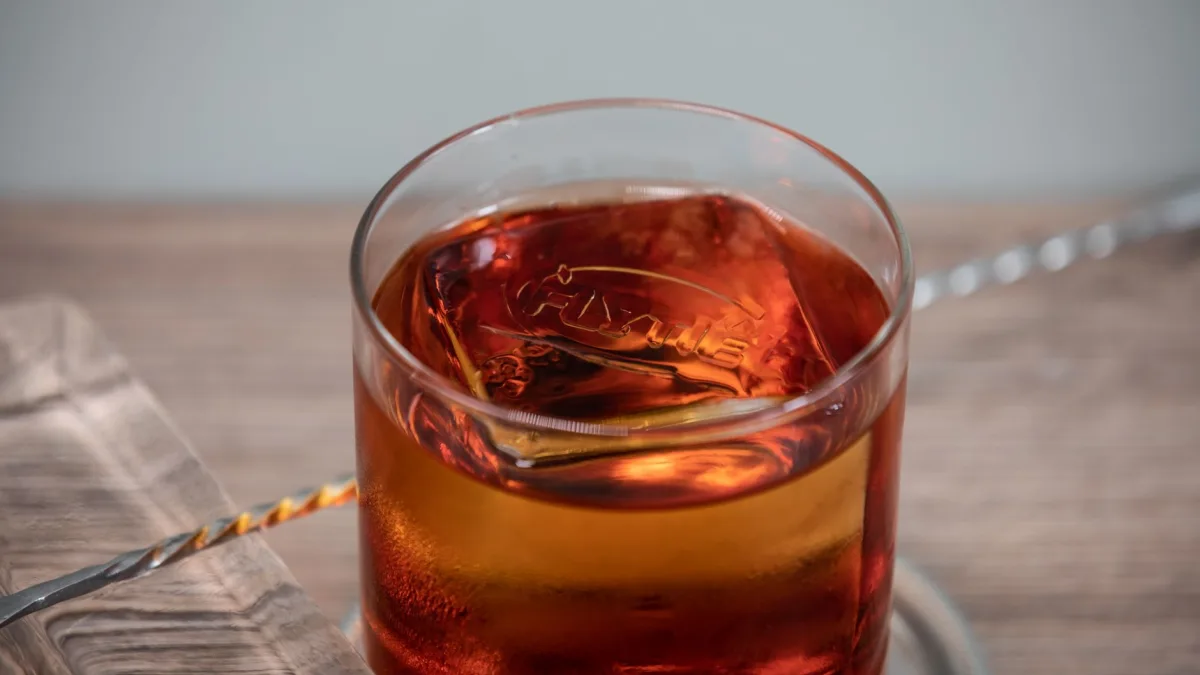
The first time I served an old fashioned over a big clear cube, my brother-in-law took a sip and asked why it tasted “stronger for longer.” It did not have more whiskey in it. The cube was just melting slower, so the drink stayed close to how I mixed it for a good fifteen minutes instead of going watery in five.
That is the whole trick with the best ice for cocktails. Shape and size decide how fast the ice melts, and melt rate decides how much water ends up in your glass. A julep wants a snowbank of crushed ice on purpose. A spirit-forward pour wants one slow-melting rock.
Here is how I match ice to each kind of drink, ranked roughly from the slowest melt to the fastest, with the reasoning for why each one works.
1. Large clear cubes for whiskey and spirit-forward drinks
For an old fashioned, a Negroni, a Manhattan, or just whiskey on the rocks, I reach for a single large cube, usually a two-inch square or a big sphere. The math is simple: a big block has less surface area relative to its volume, so it trades chill for the glass slowly.
That slow melt matters most when the drink is nearly all spirit. You want it cold and lightly opened up, not drowned. One big cube in a rocks glass keeps a Negroni drinkable for twenty minutes without turning into pink water.
Clarity earns its keep here too because you are looking right at the cube. Cloudy ice full of trapped air and minerals melts a touch faster and looks murky in a clear drink. If you want the reason cloudy ice happens and how to avoid it, I broke that down in a piece on why some ice comes out clear and some cloudy.
Chill the glass and the cube separately in the freezer for ten minutes before you build the drink. A cold glass means the cube starts melting later, so your first sip is not already diluted.
2. Standard cubes for tall mixed drinks
A gin and tonic, a rum and Coke, a vodka soda: these are built on a mixer, so a little dilution is fine and honestly welcome. Standard one-inch cubes are the workhorse here.
I fill the glass most of the way with cubes. More ice sounds like it would water down the drink faster, but a packed glass actually melts slower than a half-empty one. The cubes chill each other and the cold liquid, so the whole system holds temperature.
This is the ice most home freezers make in a tray, and it is genuinely fine for the job. You do not need anything fancy for a Tuesday-night highball.
3. Nugget ice for highballs, spritzes, and easy sippers
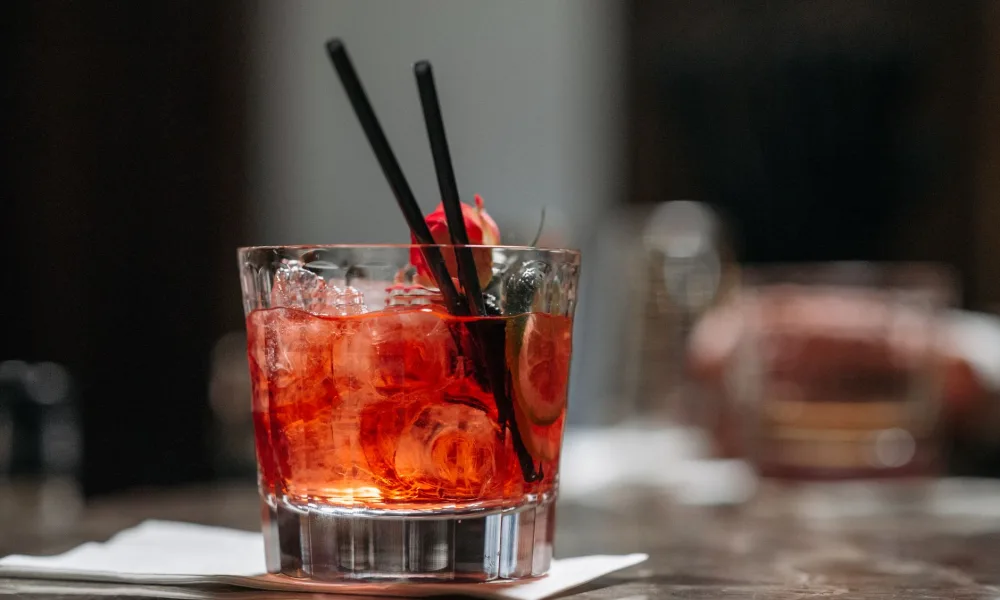
Nugget ice, the soft chewable kind, is my favorite for an Aperol spritz, a Paloma, a ranch water, or any bright, fizzy, low-proof drink. It packs into the glass, chills fast because of all that surface area, and it is genuinely fun to eat when the glass runs low.
The catch is that nugget melts quicker than a solid cube, so it adds water faster. For a spritz that is a feature, since a little extra dilution keeps the drink light and sessionable across a long, lazy afternoon. If you are new to this style, I explain what gives nugget ice that soft chew in a separate post.
Nugget also holds carbonation surprisingly well. The porous texture gives bubbles less of a single hard surface to break against, so a spritz stays fizzier than it does over one slick cube.
People call nugget ice a lot of things: pebble, sonic, chewable, the good ice. If the names confuse you, I sorted out whether nugget, pebble, and sonic ice are the same thing.
4. Crushed ice for juleps, tiki, and swizzles
A mint julep is supposed to be diluted. That mound of crushed ice melts fast, waters the bourbon down as you sip, and frosts the outside of the cup so cold it hurts your fingers a little. That is the drink working as designed.
Tiki drinks lean the same way. A Mai Tai or a Zombie carries a lot of spirit and needs crushed ice to open it up and keep it frigid. Swizzles get swizzled precisely to chill and dilute at once, and you cannot swizzle a solid cube.
I make crushed ice by wrapping cubes in a clean towel and whacking them with a rolling pin, or by pulsing them in a blender. Flake and nugget ice work here too in a pinch, though true crushed has sharper, thinner shards that frost a glass fastest.
| Ice type | Melt rate | Best drinks | Dilution goal |
|---|---|---|---|
| Large clear cube | Slowest | Old fashioned, Negroni, whiskey neat-ish | Minimal |
| Standard cube | Medium-slow | Gin and tonic, rum and Coke | Low |
| Nugget | Medium-fast | Spritz, Paloma, ranch water | Moderate, keeps it light |
| Crushed | Fastest | Julep, Mai Tai, swizzles | High and intentional |
5. Cracked ice for shaking, then a fresh pour
Here is one most people skip. When you shake a daiquiri or a margarita, the ice you shake with is not the ice you drink over. Shaking is where the real chilling and dilution happen, in maybe fifteen seconds.
I shake with cracked or standard cubes, hard, then strain the drink into a chilled coupe with no ice at all, or over fresh ice if it is served on the rocks. Using tired, half-melted ice to shake gives you a warm, watery drink no matter how long you go.
If a shaken drink of yours keeps landing weak, the shaking ice is usually the culprit, not the recipe. Fresh, dry cubes straight from the maker shake colder and dilute less than ice that has been sitting wet in the bin.
Why melt rate changes the drink so much
Every cocktail is a balance of spirit, water, sugar, and acid. Ice controls the water part in real time as you drink, which is why the shape you choose is not just about looks.
Surface area is the key idea. Crushed ice is thousands of tiny pieces with enormous total surface touching the liquid, so it melts fast and dilutes hard. One big cube is the opposite. Match that curve to how much water the drink can take before it goes flat.
Temperature of your ice matters too. Ice straight from a home freezer sits around zero degrees Fahrenheit, colder and drier than ice from most countertop makers, which produce it closer to the freezing point. Colder, drier ice melts slower at first. If you want the mechanics, I wrote about how long ice actually lasts before it melts and what speeds it up.
Pick the ice for the water you want in the glass, not the ice that happens to be in the tray.
The common mistake: one ice type for everything
The mistake I see most often is treating ice as one thing. Folks pour every drink over whatever the freezer spits out and wonder why the julep is not frosty and the Negroni went watery.
You do not need four ice makers. You need to know which two or three shapes cover your drinks and keep them on hand. A tray of big cubes for spirit-forward pours and a bag of nugget or crushed for everything fizzy and fun covers ninety percent of home bartending.
If you are curious how the shapes get made in the first place, the differences come down to how each machine freezes water, which I cover in this rundown of the main ice types and how they differ.
A quick checklist before you build a round
- Spirit-forward and stirred? One large clear cube.
- Tall and mixer-heavy? Pack the glass with standard cubes.
- Fizzy and low-proof? Nugget ice, filled high.
- Julep or tiki? Crushed ice, mounded over the top.
- Shaken and strained? Shake with fresh cubes, serve up or over fresh ice.
Water quality is the quiet variable behind all of this. Off-tasting tap water makes off-tasting ice, and you taste it most in a clean, spirit-forward drink. Starting with filtered water helps, and the CDC’s guidance on safe drinking water is a sensible baseline if you are unsure about yours.
Making the call
You do not have to overthink ice, but a few minutes of matching shape to drink pays off in every glass. Big cubes protect the spirits you want to taste. Nugget and crushed lean into dilution where the drink is built for it.
Once you feel how melt rate changes a pour, you start choosing ice on purpose instead of by accident. That is the difference between a drink that holds up and one that quietly falls apart while you are still sipping it. Keep two shapes in the freezer, reach for the right one, and your home cocktails will taste closer to what you intended for a lot longer.
Frequently asked questions
It does not add alcohol. A large cube has less surface area for its size, so it melts slowly and adds water gradually. The drink stays close to how you mixed it for much longer, which reads as stronger compared to fast-melting ice.
Both, a little. Clear ice looks cleaner in a spirit-forward drink where you can see it. It also melts slightly slower because it has fewer trapped air pockets and minerals. For mixed and fizzy drinks the difference is mostly cosmetic.
You can, but it works against the drink. Nugget melts fast and will dilute a spirit-forward cocktail quickly, making it watery in a few minutes. Save nugget for spritzes, Palomas, and tall fizzy drinks that benefit from a bit more water.
Shake with ice for almost every shaken cocktail. The ice is what chills and dilutes the drink during the shake. Use fresh dry cubes rather than half-melted ones, then strain into a chilled glass or over fresh ice.
Wrap cubes in a clean kitchen towel and hit them with a rolling pin or muddler until you get shards. A blender works too if you pulse in short bursts. Both give you the fast-melting crushed texture juleps and tiki drinks need.
Yes, especially in clean spirit-forward drinks. Off-tasting tap water makes off-tasting ice, and you notice it more when there is little mixer to hide it. Filtered water usually gives cleaner ice and a cleaner-tasting pour.

About the Author
Madhu Malhotra
Madhu Malhotra reviews nugget ice makers, countertop units, and portable freezers with a focus on real world durability. Over more than ten years of testing home ice machines she has learned which build details actually hold up, how to keep water lines clean without harsh chemicals, and what the marketing brochures quietly leave out. Her write ups aim to save readers a return trip and a wasted weekend.
Related guides
Is Machine Ice Safe and Clean to Eat?
Home machine ice is only as clean as your water and the tank it sits in, and a few small habits keep it that way.

Ice for a Sore Throat or Nausea
Soft nugget ice soothes a raw throat and settles a queasy stomach without the jaw-jarring crunch of hard cubes. Here is when it wins.
Why Ice Sticks Together and Clumps
Ice fuses in the bin because pieces melt a little and refreeze into bridges, and nugget ice clumps fastest of all.