
Why Ice Sticks Together and Clumps
Ice fuses in the bin because pieces melt a little and refreeze into bridges, and nugget ice clumps fastest of all.
Key takeaways
- Ice maker bins are insulated storage, not freezers, so ice melts a little and refreezes into a block.
- Clumping happens because a thin water film forms where pieces touch, then refreezes and welds them together.
- Nugget ice clumps fastest because it has many contact points and holds more liquid water than clear cubes.
- The GE Profile Opal recirculates water to keep pellets tumbling and loose, but it cannot stop the physics.
- Move ice to a real freezer at 0 F if you want it to stay loose and last more than an hour or two.
The first time I dug into my GE Profile Opal after a long weekend away, the bin was one solid brick. Not a scoop of loose pellets in sight, just a lump the size of a small loaf of bread that I had to crack apart with the back of a spoon. It felt like the machine had betrayed me.
It hadn’t. That block is normal physics doing exactly what physics does. Once I understood why does ice clump together, I stopped blaming the machine and started working with it.
Here is the short version, then the longer one: your ice maker’s bin is a holding tray, not a freezer. It keeps ice cold for a while, but it cannot keep it frozen forever. So the ice melts a little, the melt refreezes, and your pieces glue themselves into a mass.
The one fact that explains everything: the bin isn’t a freezer
This is the piece almost nobody tells you when you buy the machine. The insulated bin on a countertop ice maker like the Opal, the Frigidaire EFIC237, or a Newair nugget model has no cooling of its own. It is a well-insulated bucket, and that is all.
The ice-making happens on a chilled surface elsewhere in the machine. Once a piece is made, it drops into the bin and is on its own. Room temperature is winning from that moment forward, just slowly.
A true freezer holds around 0 F. A countertop ice maker bin sits at room temperature on the outside and just above freezing inside. That gap is the entire reason your ice clumps.
So the ice starts to melt the instant it lands. Not fast, but steadily. And melting is where the trouble starts, because water refreezes.
Melting plus refreezing equals a glue bridge
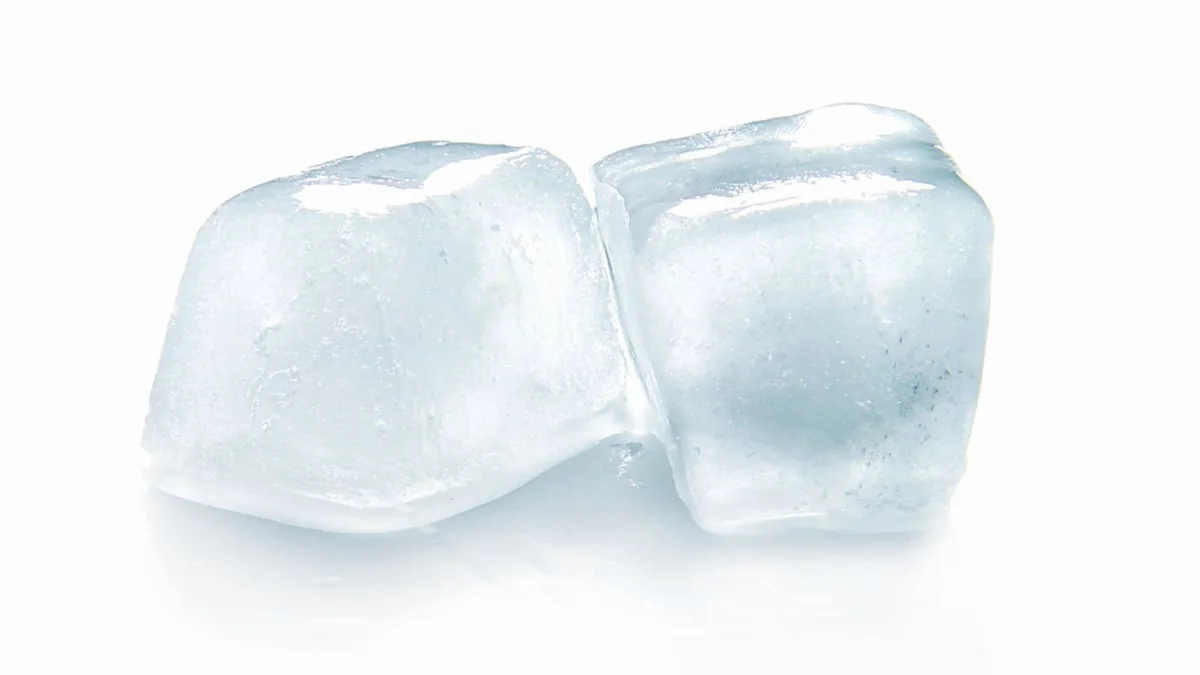
Picture two pellets touching each other in the bin. The surface of each one warms slightly and a thin film of water forms where they meet. That water pools right in the contact point.
Now the bin cools that spot again, or a fresh batch of colder ice drops nearby and pulls heat away. The water film refreezes. Except now it has frozen across both pellets at once, so it welds them together at the joint.
Multiply that by a few hundred pieces sitting still for hours and you get a single fused block. Scientists call this process sintering, and it is the same reason snow packs into a firm snowball when you squeeze it. The pressure and slight melting fuse the crystals.
Every clump in your bin is a tiny frozen handshake between two pieces that touched, melted, and froze again.
The more contact points, the more welds. And that is exactly why the shape of your ice matters so much.
Why nugget ice clumps faster than cubes
Nugget ice is the soft, chewable stuff the Opal and similar machines make, and it clumps faster than almost anything. There are two reasons, and they stack on each other.
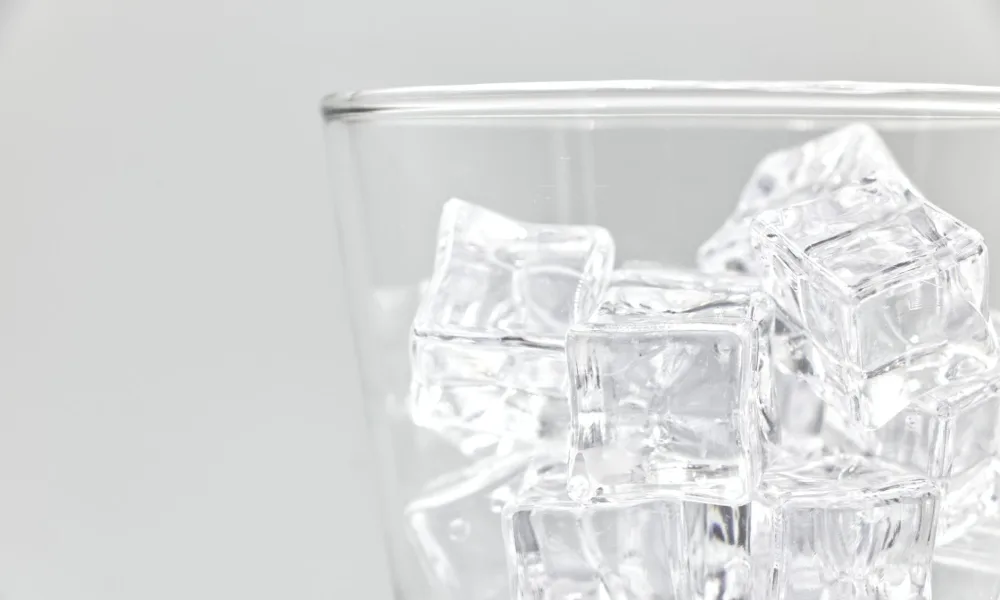
First, surface area. A nugget is small and irregular, so a pile of nuggets has far more touching points than a pile of clean cubes. More contact means more places to form those glue bridges.
Second, water content. Nugget ice is made from flaked ice pressed together, so it is riddled with tiny pockets of liquid water. It is wetter and warmer at its core than a hard clear cube, which means it melts and refreezes more eagerly. If you want the full picture on how that soft texture happens, I explain it in my piece on why nugget ice chews so soft.
| Ice type | Contact points | Water content | Clumping speed |
|---|---|---|---|
| Nugget / pebble | Very high | High | Fast (1-2 hours) |
| Crushed / flake | Very high | Medium | Fast |
| Small cubes | Medium | Low | Moderate |
| Large clear cubes | Low | Very low | Slow |
A big clear cube from a Silonn or Euhomy countertop maker is the opposite of a nugget: dense, cold, and low on contact points. It still clumps eventually, just slower. The difference between all these shapes is something I break down in my overview of the main types of ice explained.
How the Opal fights back with circulation
Here is the clever part of a good nugget machine. The GE Profile Opal does not just drop pellets in a bin and walk away. It keeps water moving.
The Opal recirculates the leftover water from ice-making back over the bin, and that gentle flow keeps the top layer of pellets loose and tumbling instead of sitting still long enough to weld. Standing water is what freezes into a block. Moving water resists it.
It is not perfect. Leave the Opal alone for a full day and the bottom of the bin, where circulation is weakest, will still fuse. But compared to a basic bullet-ice maker like a small Igloo unit that has no recirculation at all, the difference is real.
If your Opal ice is clumping badly, check that the water reservoir is full and the pump is running. A low tank starves the recirculation that keeps pellets loose. On my unit a roughly 20 ounce top-off restarted the flow within minutes.
The takeaway: circulation slows clumping, it does not stop the physics. Nothing does at room temperature.
The common mistake: expecting bin ice to last like freezer ice
The mistake I see most often is treating the countertop bin like a chest freezer. People make a full batch, close the lid, and expect loose scoopable ice hours later. Then they are annoyed to find a block.
Most countertop machines make ice on a cycle and, on many models, sense when the bin is full and pause. They do not keep the existing ice frozen. That stored ice is already melting and refreezing while you wait.
If you want ice that stays loose and lasts, the answer is a real freezer. Scoop your fresh ice into a zip bag or an insulated tub and move it to the freezer at 0 F, where melting stops and no new bridges can form. I get into the finer points of this in my rundown of ice storage mistakes that ruin the taste.
What actually keeps ice loose
You cannot beat physics, but you can slow it down. These are the habits that made the biggest difference for me over months of testing.
- Move ice to a real freezer if you want it to last more than an hour or two.
- Scoop and shake the bin every so often to break early welds before they set hard.
- Keep the machine’s water tank full so recirculation keeps running.
- Store transferred ice in a sealed bag and give it a squeeze-shake before use.
- Do not overfill the bin; tightly packed pieces have more contact points to fuse.
One more small trick I like: a quick shake of a nearly frozen bag over the sink separates the pieces without melting much. The pellets pop apart along those weak new bridges before they harden into one lump.
Does clumped ice mean anything is wrong?
Almost never. Clumping is not a defect and it is not a sign of dirty water or a broken pump. It is the default behavior of ice sitting near its melting point.
That said, water quality does affect how your ice behaves and tastes over time. Harder water leaves more mineral residue as ice melts and refreezes, which is worth understanding; the USGS has a plain explainer on what water hardness actually is. Softer, filtered water makes cleaner ice, though it will still clump. For which water works best in these machines, see my notes on the best water for making ice at home.
So a block in the bin is not a red flag. It is a scoop-and-shake situation, nothing more.
Where this leaves you
Clumping ice used to feel like a flaw in my machine. Now I read it as a reminder of what the bin actually is: temporary storage that keeps ice cold, not a device that keeps it frozen. The melting-and-refreezing cycle welds pieces together, nugget ice does it fastest because it is small and wet, and circulation on machines like the Opal only slows the process.
Work with that instead of against it. Keep the tank full, shake the bin, and move ice to the freezer when you need it to last. Do that and the brick-in-the-bin surprise stops being a surprise at all.
Frequently asked questions
The bin is insulated storage, not a freezer, so the ice slowly melts. A thin film of water forms where pieces touch, then refreezes and fuses them together. Over a few hours this welds hundreds of pieces into a single block.
Yes, noticeably. Nugget ice is small and irregular, so a pile has far more touching points where bridges can form. It also holds more liquid water than a dense clear cube, so it melts and refreezes more readily.
Keep the water reservoir full so the recirculation pump can keep the top pellets tumbling. Shake or scoop the bin periodically to break early welds. For ice that stays loose for hours, move it to a real freezer instead of leaving it in the bin.
No. Clumping is normal physics for ice sitting near its melting point and is not a defect. It does not mean your water is dirty or your pump has failed. Just break it up with a scoop or a shake and use it as normal.
Not at room temperature, because the melting and refreezing that fuses pieces cannot be avoided in an insulated bin. You can only slow it with circulation, shaking, and keeping the bin from overfilling. Only a real freezer at 0 F stops it entirely.
Nugget and crushed ice can start fusing within one to two hours because of their high contact area and water content. Large clear cubes take longer since they are denser and touch in fewer spots. Machines with water recirculation slow the process but do not stop it.

About the Author
Madhu Malhotra
Madhu Malhotra reviews nugget ice makers, countertop units, and portable freezers with a focus on real world durability. Over more than ten years of testing home ice machines she has learned which build details actually hold up, how to keep water lines clean without harsh chemicals, and what the marketing brochures quietly leave out. Her write ups aim to save readers a return trip and a wasted weekend.
Related guides
Best Ice for Coolers and Keeping Food Cold
The best ice for coolers is a block on the bottom with cubes filling the gaps, and here is why nugget ice is the wrong pick for a long day out.

Is Chewing Ice Bad for Your Teeth?
Hard cubes can crack enamel and fillings, soft nugget ice is far gentler, and a constant craving can point to low iron.

Is Machine Ice Safe and Clean to Eat?
Home machine ice is only as clean as your water and the tank it sits in, and a few small habits keep it that way.