
How to Descale an Ice Maker With Vinegar
The correct vinegar ratio, soak time, and rinse count so scale clears out and the next batch of ice tastes clean.
Key takeaways
- Use a 10 to 1 water-to-vinegar ratio for routine scale, stronger only for heavy buildup.
- Let the solution soak 15 to 20 minutes before running any cycle.
- Run one or two cleaning cycles to move solution through the pump and evaporator.
- Rinse with plain water two to four times and discard the ice until no vinegar smell remains.
- Descale every three to four weeks on hard water, six to eight on soft or filtered.
The first sign is usually the ice itself. Cubes that used to come out clear start looking cloudy, or a nugget batch shrinks a little each week and the machine takes longer to fill. On my Frigidaire EFIC237 I once watched a full production drop from about 26 pounds a day to maybe 18, and the water line inside the reservoir had a chalky white crust I could scrape with a fingernail.
That crust is mineral scale, mostly calcium and magnesium left behind as water evaporates and freezes. It coats the reservoir, the pump inlet, and the evaporator plate where the ice actually forms.
The good news: you can descale ice maker with vinegar in about 30 minutes of hands-on work, and the ingredients cost under two dollars. The part people get wrong is the rinse, which is why so many folks end up with sour ice. I will walk through the whole thing.
Why scale builds up in the first place
Ice makers freeze water and leave the minerals behind. Every gallon you run through deposits a tiny bit of hardness on the internal surfaces, and over weeks that adds up to a visible film.
How fast it happens depends almost entirely on your water. If you are on a well or a hard municipal supply, you might see scale in three to four weeks. Soft or filtered water can go two months looking fine. The U.S. Geological Survey has a good plain-English explainer on what makes water hard if you want to check where your area lands.
Scale does not just look bad. It insulates the evaporator so the machine works harder to freeze each batch, which slows production and raises the wattage draw. A countertop unit that normally pulls around 120 watts while making ice starts running longer cycles to hit the same output. If your buildup is severe, the dedicated guide on handling hard water scale in an ice maker covers prevention steps worth reading after this.
What you need before you start
Nothing exotic. Plain distilled white vinegar is the workhorse here, and it is what I reach for on every machine I test.
- Distilled white vinegar (5 percent acidity, the standard grocery kind)
- Clean, fresh water for the solution and for rinsing
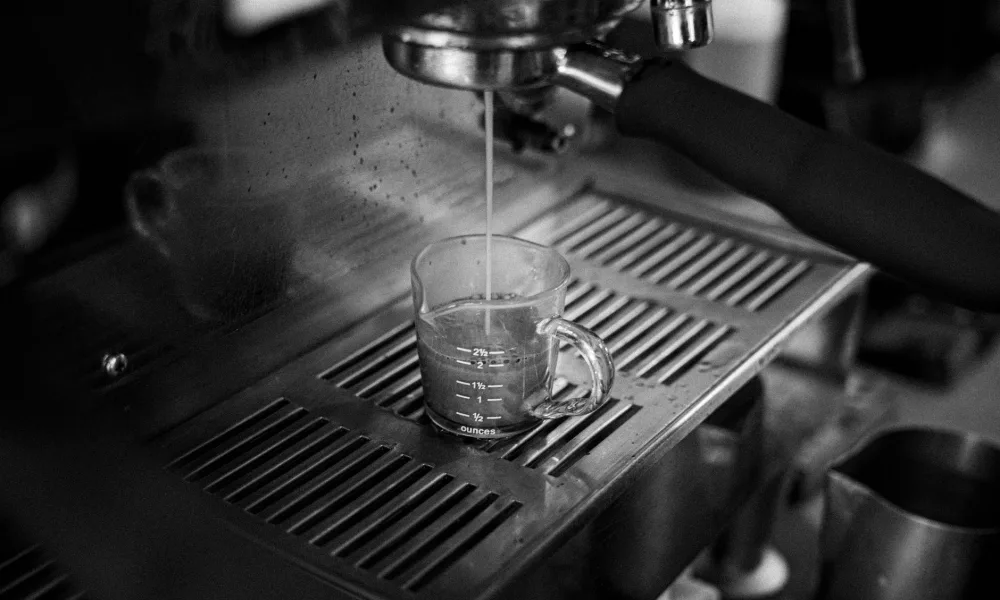
- A measuring cup marked in ounces
- A soft cloth or a soft-bristle toothbrush for corners
- A bowl or the sink to dump used solution
Distilled white vinegar only. Skip apple cider or wine vinegar, which carry sugars and pigments that can leave residue and stain plastic. If you are weighing vinegar against a store-bought product, the comparison in vinegar vs commercial ice maker cleaner lays out where each one wins.
The right water-to-vinegar ratio
This is where people either overdo it or go too weak. For routine scale, a 10 to 1 ratio of water to vinegar is plenty. For heavier buildup you can drop to 3 to 1, and for a badly neglected machine straight into 1 to 1 for the soak only.
Match the total volume to your reservoir. Most countertop makers hold somewhere between 20 and 40 ounces, so measure to your fill line rather than guessing.
| Scale level | Water : vinegar | Example (30 oz reservoir) |
|---|---|---|
| Light / routine | 10 : 1 | 27 oz water, 3 oz vinegar |
| Moderate crust | 3 : 1 | 22 oz water, 8 oz vinegar |
| Heavy / neglected | 1 : 1 | 15 oz water, 15 oz vinegar |
Do not use undiluted vinegar in a full running cycle. Straight acid is fine for a static soak, but pumping it through the system for long stretches can be rough on gaskets and the pump seal over time. Dilute before you run cycles.
Step by step: descaling with vinegar
Here is the exact sequence I follow. It works on nugget makers like the GE Profile Opal and on cube units like the Silonn, Euhomy, Newair, and Igloo countertop models.
- Empty and unplug. Dump any ice, remove the ice basket, and drain the reservoir completely. Wet plastic hides scale, so getting it empty first tells you how bad it really is.
- Mix your solution. Use the ratio from the table above and pour it into the reservoir up to the fill line.
- Let it soak. Leave the solution sitting for 15 to 20 minutes. This is the part most people skip, and it is what loosens the crust so the pump does not have to fight it.
- Run a cleaning cycle. Plug in and start a clean cycle if your machine has one, or start a normal ice cycle and let it move the solution through the pump and over the evaporator. Let it circulate 5 to 10 minutes.
- Run a second cycle if needed. For moderate or heavy scale, drain, refill with the same solution, and run once more. Two passes clears the pump path that a single soak cannot reach.
- Drain the vinegar solution fully. Empty the reservoir and wipe the interior with your cloth. Hit corners and the water sensor area with the toothbrush.
If your unit has a dedicated clean button, run it during step four so the machine circulates the solution through its full path for you.
The rinse: how many cycles until the ice tastes clean
This is the step that makes or breaks the whole job. Vinegar residue is exactly why people complain their ice tastes sour after cleaning.
Fill the reservoir with plain fresh water, run a full ice cycle, then dump both the water and the ice it makes. Do not eat that first batch. Repeat this rinse two to three times for a light descale, and three to four times if you used the 1 to 1 strength.
Any batch of ice you can smell vinegar on is a batch you rinse again. Your nose is the sensor here.
I run one extra rinse past the point where I stop smelling anything, just for peace of mind. It costs five minutes and a little water, and it is the difference between crisp ice and ice that ruins a glass of water. If your ice still tastes off after a proper rinse, the bad-tasting ice checklist runs through what else could be going on.
A common mistake I keep seeing
The single most frequent error is rushing the rinse to get back to making ice. Someone descales, does one quick water pass, and declares victory. The next tray tastes like salad dressing.
The second mistake is descaling but never touching the parts vinegar cannot reach: the ice chute, the basket, and the reservoir corners where a pink or gray film can grow. Vinegar handles mineral scale, not biofilm. If you are seeing slime or discoloration, that is a separate job covered in removing pink slime from an ice maker. For the full soup-to-nuts routine that combines both, the pillar walkthrough on how to clean an ice maker step by step ties descaling and sanitizing together.
How often to descale
Frequency follows your water more than a calendar. On hard water, I descale every three to four weeks. On filtered or soft water, every six to eight weeks holds fine.
An easy rule: if you can see a white line at the water level or feel grit on the reservoir wall, it is time. A fresh water filter also slows buildup, so replacing it on schedule stretches the interval between descales.
Descaling and sanitizing are two different tasks. Vinegar dissolves minerals; it is not a strong sanitizer for mold or bacteria. Keep a real cleaning rhythm going alongside your descaling, and the EPA has practical guidance on water efficiency and quality worth a look for the water side of things.
Where this leaves you
Descaling with vinegar is genuinely simple once you respect two numbers: the ratio going in and the rinse cycles coming out. Match the strength to how bad the scale is, give it a real soak instead of an instant cycle, and then rinse until your nose says it is clean.
Do that, and a machine that was crawling along at 18 pounds a day comes back to full output with ice that tastes like nothing at all, which is exactly what you want. Put it on a rough schedule tied to your water hardness and you will rarely let it get bad enough to slow down again.
Frequently asked questions
Diluted white vinegar is safe for the plastic, pump, and seals in most countertop and nugget machines when used for short cycles. Avoid running undiluted vinegar through the pump for long stretches, since concentrated acid can wear on gaskets over time. Keep it to a static soak at full strength and dilute for any running cycle.
Let the solution soak for 15 to 20 minutes before you run a cycle. That window softens the mineral crust so the pump does not have to force solution through hardened scale. For very heavy buildup you can extend the soak to 30 minutes.
That sour taste is leftover vinegar residue in the reservoir and pump path. It means you did not rinse enough times before making ice you actually keep. Run two to four plain-water cycles, discarding the water and ice each time, until you can no longer smell any vinegar.
Stick with distilled white vinegar. Apple cider and wine vinegars contain sugars and pigments that can leave residue and stain plastic parts. White vinegar has the same acidity for dissolving scale without those downsides.
Look for a white or chalky line at the water level inside the reservoir, or run your finger along the wall and feel for grit. Slower ice production and cloudier cubes are also signs that scale is insulating the evaporator. If you see any of these, it is time to descale.
Vinegar dissolves mineral scale but is not a strong sanitizer for mold, pink slime, or bacteria. If you see colored film or slime, that needs a separate cleaning and sanitizing step. Treat descaling and sanitizing as two different tasks in your routine.

About the Author
Madhu Malhotra
Madhu Malhotra reviews nugget ice makers, countertop units, and portable freezers with a focus on real world durability. Over more than ten years of testing home ice machines she has learned which build details actually hold up, how to keep water lines clean without harsh chemicals, and what the marketing brochures quietly leave out. Her write ups aim to save readers a return trip and a wasted weekend.
Related guides
7 Ice Maker Cleaning Mistakes to Avoid
The cleaning habits that ruin ice or wreck the machine, and the safe swap for each one.

How to Store an Ice Maker for the Season
A simple end-of-season routine to deep clean, drain, and dry your ice maker so it does not greet you with a musty smell next summer.
How to Remove Pink Slime From an Ice Maker
That pink film in the reservoir is bacteria, not scale, and here is how to scrub it out and keep it from coming back.