
How to Clean an Ice Maker: Full Step-by-Step
A universal cleaning sequence that works for nugget, countertop, and portable machines, from draining and descaling to sanitizing and drying.
Key takeaways
- Almost every ice maker follows the same clean: empty, drain, descale, sanitize, rinse, and air-dry.
- Draining fully and drying with the lid open are the two steps most people skip and the two that matter most.
- A one-to-three vinegar mix run through a cycle clears the mineral scale that makes ice cloudy.
- Wipe weekly and do a full descale monthly for daily-use machines, less often for light use.
- Never submerge the base; the pump and control board live underneath and hate water.
The first time I pulled the bin out of a neglected countertop ice maker, the smell told me everything. It was faintly sour, a little musty, the way a wet towel smells if you leave it balled up for a week. The ice looked fine. It was not fine.
That machine belonged to a friend who ran it hard all summer and never once wiped it down. If you have ever wondered how to clean an ice maker without guessing, the good news is that almost every model, from a GE Profile Opal to a $120 Silonn countertop unit, follows the same basic path.
I have run this sequence on nugget makers, bullet-ice portables, and clear-cube machines. The steps below are the ones that actually move the needle, plus the small habits that keep you from doing this the hard way twice a year.
Why an ice maker gets dirty in the first place
Ice makers are warm, wet, and dark inside. That is the exact combination mold, yeast, and a slippery film called biofilm love. Even filtered water carries minerals, and every batch of ice leaves a little scale behind as the water freezes and the rest recirculates.
Countertop models make the problem worse because the water in the reservoir sits at room temperature between cycles. A Frigidaire EFIC237 or a Newair bullet maker can turn out 26 to 40 pounds of ice a day, and all of that water passes over the same pump and tray. Skip cleaning for a month and you get cloudy ice, a stale taste, and sometimes visible slime.
Cloudy or fast-melting ice is usually a scale problem, not a freezing problem. Mineral buildup insulates the cold plate and slows the whole cycle down.
What you need before you start
You do not need a cabinet full of chemicals. I clean most machines with two things: a mild acid to dissolve scale and a food-safe sanitizer to kill what is living in the damp corners.
- White vinegar or a commercial ice maker descaler (nickel-safe, no bleach fumes)
- A soft cloth or two, plus a small bottle brush for tight channels
- A capful of unscented bleach or a food-safe sanitizer for the final wipe
- Warm water for rinsing, and a clean towel for drying
Skip abrasive pads, scented dish soap, and anything with a strong perfume. That smell will haunt your next three batches of ice. If you are deciding between homemade and store-bought solutions, my breakdown of vinegar versus a commercial ice maker cleaner covers when each one earns its place.
The universal cleaning sequence, step by step
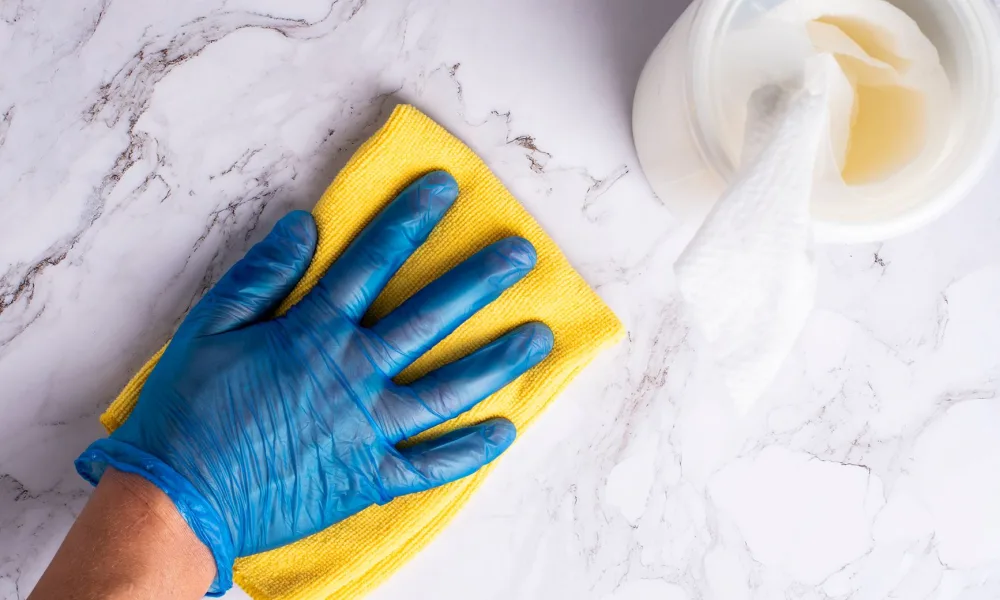
Here is the order I follow every single time. Do not shuffle it. Draining first and drying last are the two steps people skip, and they are the two that matter most.
- Unplug and empty. Power off, unplug, and dump all the ice. Old ice can carry whatever is growing inside, so it goes in the sink, not your drink.
- Drain the water fully. Every machine has a drain plug or a tip-and-pour spot underneath. Getting this right matters enough that I wrote a separate walkthrough on how to drain an ice maker completely, because trapped water is where the funk restarts.
- Wash the bin and basket. Pull out the ice basket and scoop. Wash them in warm soapy water, rinse well, and set them aside to dry.
- Descale the water path. Fill the reservoir with a solution of one part white vinegar to three parts water. Run a cycle or two so the acid moves through the pump, lines, and tray. This is the step that clears mineral scale.
- Sanitize the damp corners. Wipe the reservoir, the ice-making tray, and any gaskets with a light sanitizing solution. Get into the seams where slime hides.
- Rinse twice. Refill with plain water and run at least two full cycles. Dump that ice. You are flushing out every trace of cleaner.
- Air-dry with the lid open. Leave the bin lid and reservoir cap open for a few hours. A dry interior is a machine that stays clean.
Run a paper towel along the bottom of the empty reservoir after draining. If it comes back slick or gray, that is biofilm, and it needs the sanitizing wipe before you refill.
How the vinegar descale actually works
Vinegar is dilute acetic acid, usually around 5 percent. That acidity dissolves the calcium and magnesium that hard water leaves behind. The harder your tap water, and you can check your area on the USGS water hardness science page, the more often you will need this step.
For a normal maintenance clean, a one-to-three vinegar mix and one recirculating cycle is plenty. For a machine that has gone months without care, you may need a stronger mix and a soak. I break down the exact ratios and soak times in the guide to descaling an ice maker with vinegar.
Scale is silent. You will not see it until the ice gets small and cloudy, and by then the pump has been fighting it for weeks.
Model-specific quirks worth knowing
The universal sequence covers 90 percent of machines. The last 10 percent is where model differences show up, and a couple of them trip people up.
Nugget makers hold more water than you think
Nugget machines like the GE Profile Opal recirculate a large reservoir and have a soft-ice auger that traps residue. They almost always ship with a built-in cleaning routine. Running that routine matters, and I explain the button sequence in my piece on how to clean a nugget ice maker the right way.
Portables reward speed over depth
A Euhomy or Igloo countertop portable has almost no plumbing, so a full clean takes about 20 minutes. Because they are simple, you can and should clean them more often. My fast portable ice maker cleaning method skips the parts these small units do not have.
Never submerge the base of any ice maker. The pump, fan, and control board live under there. Water in the electronics is how a $150 machine becomes a doorstop.
How often you should be doing this
My rule of thumb: a quick bin-and-reservoir wipe every one to two weeks, and a full descale-and-sanitize once a month for daily-use machines. Vacation homes and seasonal setups can stretch that, but only if you drained and dried before storage.
| Task | Everyday use | Light use |
|---|---|---|
| Wipe bin and reservoir | Weekly | Every 2 weeks |
| Full descale and sanitize | Monthly | Every 2-3 months |
| Deep clean and inspect | Every 6 months | Yearly |
If you want a printable version that accounts for hard water and heavy use, I put together a full ice maker cleaning schedule that runs from weekly to yearly.
The one mistake I see most often
People clean the visible parts and stop. They wipe the shiny bin, admire it, and refill. Meanwhile the pump, the drain line, and the water sensor keep every bit of their gunk.
That is why the descale cycle exists. It sends cleaner through the parts your cloth will never reach. Skip it and you are treating the symptom while the source keeps seeding the reservoir. If you ever see pink or black growth, that is a sign the hidden parts have been neglected, and it needs a targeted fix rather than a wipe.
Where this leaves you
Cleaning an ice maker is not hard once you stop treating it like a mystery. Empty it, drain it, descale the water path, sanitize the damp corners, rinse twice, and let it dry with the lid open. That order, run on a regular schedule, is the whole game.
The payoff is real. Clear ice, no stale smell, and a machine that lasts years instead of months. Do the ten-minute version often and you will almost never need the two-hour rescue version. And if your ice already tastes off, start with the sequence above, then confirm your water and filter are pulling their weight before you blame the machine.
Frequently asked questions
For a machine you use every day, wipe the bin and reservoir weekly and run a full descale and sanitize once a month. Light or occasional use can stretch to every two or three months. Hard water areas should clean more often because scale builds faster.
You can use a small amount of unscented bleach, roughly a teaspoon per gallon of water, as a final sanitizing rinse. Always follow it with two plain water cycles to flush every trace out. Never mix bleach with vinegar, since that combination creates a toxic gas.
Usually the culprit is an old water filter, leftover cleaner that was not fully rinsed, or scale still trapped in the pump. Run two extra plain water cycles and dump that ice. If the taste lingers, replace the filter and check the water source itself.
Vinegar handles routine scale cheaply and is safe for most machines. Commercial ice maker cleaners work faster on heavy buildup and often include a sanitizing agent. For a monthly maintenance clean, vinegar is usually all you need.
Yes, always unplug it before you empty and drain. It protects you from any electrical risk and stops the machine from trying to run a cycle while you have parts removed. Plug it back in only after the interior is wiped and ready for the descale cycle.
The removable bin and scoop are often dishwasher safe on the top rack, but check your manual first. Never put the reservoir base, pump, or any part with electronics near a dishwasher. Hand washing in warm soapy water is the safe default.

About the Author
Madhu Malhotra
Madhu Malhotra reviews nugget ice makers, countertop units, and portable freezers with a focus on real world durability. Over more than ten years of testing home ice machines she has learned which build details actually hold up, how to keep water lines clean without harsh chemicals, and what the marketing brochures quietly leave out. Her write ups aim to save readers a return trip and a wasted weekend.
Related guides
Deep Cleaning a Neglected Nugget Ice Maker
A real recovery of a six-month-neglected Opal with scale, pink slime, and a musty smell, plus the exact order that got it clean.

How to Store an Ice Maker for the Season
A simple end-of-season routine to deep clean, drain, and dry your ice maker so it does not greet you with a musty smell next summer.
Handling Hard Water Scale in an Ice Maker
How calcium and magnesium crust up your reservoir and evaporator, why it clouds and slows your ice, and how a hardness test sets your descale rhythm.