
Best Water for Making Ice at Home
Filtered, tap, or distilled: what actually makes cleaner, better-tasting ice, and exactly what to pour into your countertop machine.
Key takeaways
- Filtered water is the everyday sweet spot for taste and low scale buildup.
- Distilled water gives the clearest ice and least scale, best for hard-water homes.
- Hard tap water adds a mineral taste and speeds up scale in the tank.
- Dump and refill the reservoir every day or two to avoid stale, funky flavors.
- Descale every 2 to 4 weeks even when using filtered water.
The first time I ran my GE Profile Opal, I filled the tank straight from the kitchen faucet, hit start, and expected magic. What I got, three days later, was a batch of nuggets that tasted faintly like the inside of a garden hose and a tank with a chalky white ring creeping up the sides. My tap water is hard, and the machine was quietly telling me so.
That little experiment sent me down a rabbit hole of testing. I have poured tap, pitcher-filtered, and distilled water through the same three machines and tasted the ice side by side more times than I care to admit. The best water for making ice at home is not a mystery once you understand what your water is carrying into the tank.
Here is what I learned, and how to pick the right pour for your machine.
The three waters, and what each one does to your ice
Every water you might reach for falls into one of three buckets. They behave differently once they freeze, and the differences are easy to taste once you know what you are looking for.
| Water type | Taste of ice | Clarity | Mineral scale in tank | Best for |
|---|---|---|---|---|
| Tap (hard) | Can carry chlorine or metallic notes | Cloudier | High, builds fast | Nothing, if you can avoid it |
| Filtered (pitcher or fridge) | Clean, neutral | Slightly clearer | Low to moderate | Everyday nugget and cube makers |
| Distilled | Flat, very neutral | Clearest | Almost none | Very hard water areas, cocktail ice |
Tap water is the wild card because it changes block to block. If your city adds a lot of chlorine for treatment, you will taste it in the ice, especially in something clean like water or ice for cold brew and iced coffee where there is nowhere for off-flavors to hide.
How hardness changes taste and cloudiness
Hardness is just the amount of dissolved calcium and magnesium in your water. The U.S. Geological Survey has a good plain explainer on what water hardness actually means if you want the full picture.
Those minerals do two annoying things. They give ice a faint mineral or metallic edge, and they get trapped as tiny pockets when water freezes, which is a big part of why ice looks white and foggy instead of glass-clear.
Nugget ice is cloudy by design because it is made from compacted flakes full of air, so hardness matters less for looks there. It matters a lot more for taste, and it matters a lot for your machine. If you want the full story on why some ice looks foggy, I dug into that in my piece on clear versus cloudy ice.
Not sure how hard your water is? A cheap test strip from the hardware store gives you a number in seconds. Anything above about 120 mg/L (7 grains per gallon) counts as hard, and that is where I start reaching for filtered or distilled.
So which water should you actually use?
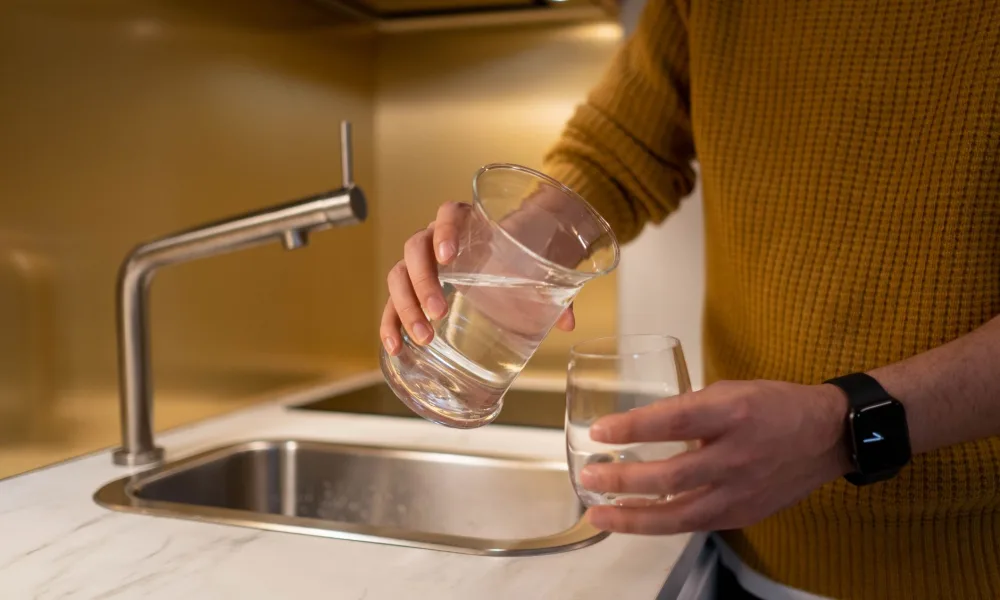
My short answer, after all the tasting: filtered water for daily use, distilled if your tap is genuinely hard and you care about a spotless machine. Straight tap only if your water is soft and tastes good from the glass already.
Filtered water is the sweet spot for most people. It strips the chlorine and most of the off-taste, it is cheap if you already own a pitcher or a fridge with a filter, and it slows scale buildup without leaving your ice tasting like nothing at all. That last part matters more than you would think for ice you plan to use in cocktails, where a clean neutral base lets the drink come through.
Distilled is the purist option. Almost no minerals means almost no scale and the clearest ice you can make at home. The trade-off is a slightly flat taste, since some of the pleasant minerals are gone too, and you have to keep buying jugs of it.
If your tap water tastes great from the glass, it will taste great as ice. The machine does not add flavor. It only reveals what was already there.
A simple routine for filling your machine
Here is the exact process I follow now, whether I am loading the Opal, a Frigidaire EFIC237, or a little Silonn countertop cube maker.
- Start with the right water. Filtered from a Brita or fridge line for everyday batches. Distilled if my water is hard or I want the clearest possible cubes.
- Check the fill line. Most countertop makers hold between 30 and 60 ounces. The Opal reservoir is a bit under a gallon. Do not overfill past the max mark or you will get overflow at the base.
- Use room-temperature water. Ice-cold water from the fridge does not freeze faster and can confuse the machine’s sensors. Cool tap-temperature is fine.
- Empty the tank if it has been sitting. Water left in the reservoir more than a day or two gets stale and can grow biofilm. I dump and refill rather than topping off.
- Run a full cycle before you judge it. The first batch after a refill often carries flavor from whatever was in the lines before.
If you are using distilled or heavily filtered water and your ice maker throws a low-water sensor error, that is a known quirk on some models. The sensors detect ice production by electrical conductivity, and ultra-pure water conducts poorly. Mixing in a little filtered tap usually fixes it.
The mistake almost everyone makes
The single biggest error I see is treating the water tank as fill-and-forget. People pour tap water in once, then leave the machine running for a week, topping off without ever dumping the old water.
Stale water in a warm kitchen reservoir is where funky tastes and slime come from, not the ice-making itself. This is the same principle behind good ice storage habits: freshness in equals freshness out.
The second mistake is skipping descaling. Even with filtered water, minerals build up over months. A machine that is scaling badly makes slower, smaller, worse-tasting ice, and the fix is a simple vinegar or citric-acid cleaning cycle every few weeks.
- Dump and refill the reservoir every day or two
- Use filtered or distilled water in hard-water homes
- Run a descale cycle every 2-4 weeks
- Wipe the tank dry before storing the machine
Is any of this a safety issue?
Mostly this is about taste and machine longevity, not safety. If your tap water is safe to drink, it is safe to freeze. The CDC’s healthy water guidance is a solid starting point if you are unsure about your local supply.
The real safety concern is a dirty machine, not the water source. A neglected reservoir with old water and biofilm is far more likely to cause problems than clean tap water ever would. I covered the full safety rundown in whether machine ice is safe and clean to eat, and the recurring theme is cleaning, cleaning, cleaning.
Does the water type change how the ice chews?
People ask me this a lot, and the honest answer is: barely. The soft, chewable texture of nugget ice comes from how the machine compacts flakes and how much air gets trapped, not from your water. If you want the mechanics, I broke it down in why nugget ice chews so soft.
What water does change is taste and clarity. Distilled water in a cube maker gives you noticeably clearer cubes. Filtered water in a nugget maker gives you cleaner-tasting nuggets. Neither will turn a nugget machine into a clear-cube machine, because that is about the machine and the ice type, not the pour. If you are still sorting out which shape you actually want, my rundown of the main types of ice explained lays out nugget, cube, and crushed side by side.
Making the call
If I had to hand you one rule, it would be this: use filtered water, dump and refill the tank often, and descale on a schedule. That single habit fixes ninety percent of the taste and clarity complaints I hear about home ice makers.
Reach for distilled only if your tap is genuinely hard or you are chasing the clearest possible ice for cocktails. And if your tap water already tastes clean from the glass, do not overthink it. Pour it in, keep the tank fresh, and enjoy the ice. Your machine, and your drinks, will thank you.
Frequently asked questions
Yes, and it gives clean, low-scale ice. On some units very pure water can trip a low-water sensor because it conducts electricity poorly. If that happens, mix in a little filtered tap water to restore normal conductivity.
Usually yes, especially if your tap is chlorinated or hard. Filtering removes most chlorine and off-tastes, so the ice tastes cleaner. If your tap already tastes great from the glass, the difference will be small.
It helps in a cube maker, since fewer trapped minerals mean clearer cubes. It will not make nugget ice clear, because nugget ice is cloudy by design from compacted flakes and trapped air. The water type mostly affects taste and machine scale, not the ice shape.
Dump and refill the reservoir every one to two days rather than topping it off. Water sitting in a warm kitchen tank goes stale and can grow biofilm. Fresh water in means fresh-tasting ice out.
If your tap water is safe to drink, it is safe to freeze into ice. The bigger risk is a dirty machine rather than the water source. Keep the reservoir fresh and descale regularly and tap water is perfectly fine.
Not really. Ice-cold water from the fridge does not freeze faster and can confuse the machine's sensors. Room or cool tap temperature water works best for most countertop makers.

About the Author
Madhu Malhotra
Madhu Malhotra reviews nugget ice makers, countertop units, and portable freezers with a focus on real world durability. Over more than ten years of testing home ice machines she has learned which build details actually hold up, how to keep water lines clean without harsh chemicals, and what the marketing brochures quietly leave out. Her write ups aim to save readers a return trip and a wasted weekend.
Related guides
Ice Maker Terms: A Plain Glossary
A plain glossary of the words you keep hitting while shopping, each one defined in a line with a real machine as the example.

Best Ice for Cocktails at Home
Match the ice shape to the drink and you control dilution, chill, and how long the pour holds up in the glass.
Best Ice for Coolers and Keeping Food Cold
The best ice for coolers is a block on the bottom with cubes filling the gaps, and here is why nugget ice is the wrong pick for a long day out.