
Clear vs Cloudy Ice: Why the Difference
The haze in home ice comes from trapped air and minerals freezing fast, and here is why that rarely matters for a home drink.
Key takeaways
- Cloudy ice comes from trapped air and minerals when water freezes fast on all sides at once.
- Clear ice is made by slow, one-direction freezing that pushes air and minerals out.
- Countertop and nugget machines make cloudy ice on purpose because they freeze fast.
- For most home drinks, clarity is about looks, not cooling power.
- Filtering water reduces mineral residue and scale but will not fix cloudiness.
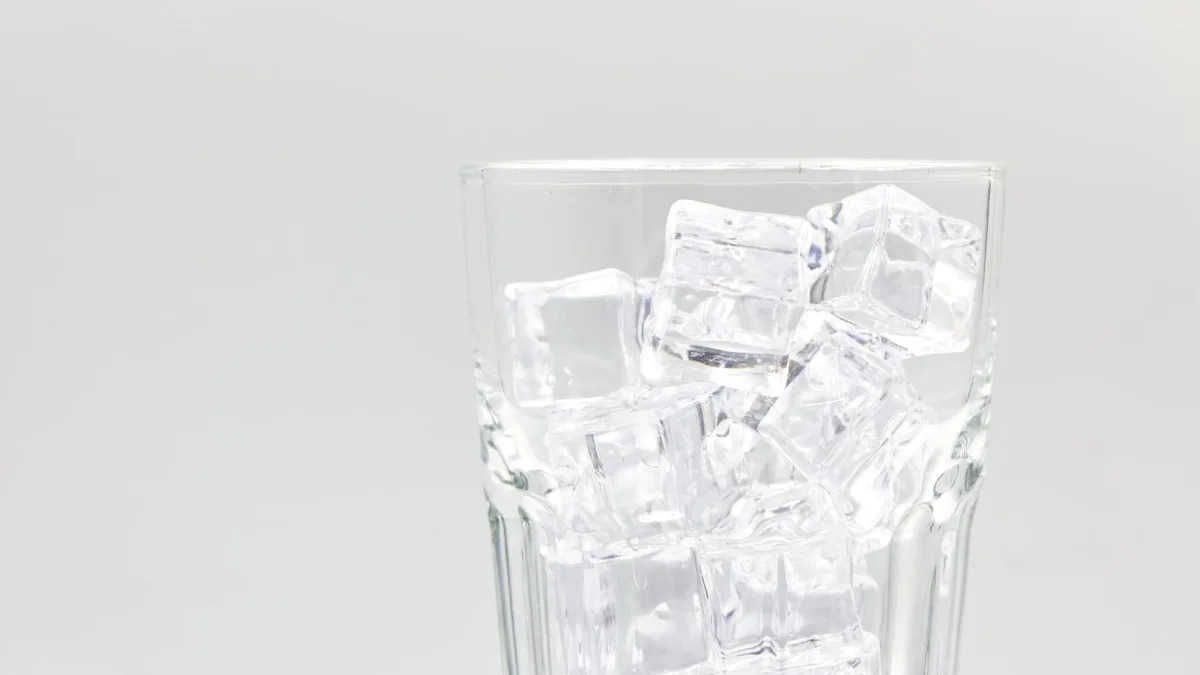
The first time I lined up an ice cube from my freezer tray next to one from a fancy bar, the difference was almost funny. The bar cube was glassy, like a little chunk of window. Mine looked like a frosted bathroom pane, cloudy white right through the middle.
That side by side is the whole story of clear vs cloudy ice. Same water, same freezer in some cases, wildly different looks. The reason comes down to how fast the water froze and what got trapped inside while it did.
I have made a lot of ice testing countertop and nugget machines, and I get this question constantly: why is my ice cloudy, and should I care? Here is what actually causes the haze, and when it matters.
What makes ice cloudy in the first place
Clean water is not just water. It carries dissolved air (oxygen and nitrogen) plus minerals like calcium and magnesium, the same stuff that makes water “hard.” You can read more about what mineral content in tap water actually means from the USGS water science school.
When water freezes fast, ice crystals form all over at once, on every surface of the cube at the same time. As that ice wall closes in, the air and minerals have nowhere to escape. They get frozen in place as thousands of tiny bubbles and specks.
Those trapped bubbles scatter light instead of letting it pass through. That scattering is what your eye reads as cloudy or white. The ice is perfectly fine to chew and drink. It just looks foggy because it is full of microscopic air pockets.
Cloudy ice is not dirty ice. The white haze is trapped air and minerals, not grime. If you want to know whether the ice itself is clean, that is a separate question I cover in whether machine ice is safe to eat.
Why clear ice is clear: slow, one-direction freezing
Clear ice is not made from special water. It is made by freezing in one direction, slowly.
When water freezes from a single side, say the top down, the pure water freezes first and pushes the air and minerals ahead of the ice front. Everything that would cause haze gets shoved down into the last part to freeze. The top and middle come out crystal clear, and the cloudy junk ends up concentrated in a small zone you can trim off.
That is the trick behind those clear ice ball molds and the insulated “cooler” method bartenders love. An insulated container forces the water to freeze from the top down over 18 to 24 hours instead of all at once. Slow plus one direction equals clear.
Your freezer tray does the opposite. It freezes from all sides at high speed, so every bit of air gets locked in. Fast plus all directions equals cloudy.

Clear vs cloudy at a glance
| Factor | Clear ice | Cloudy ice |
|---|---|---|
| Freeze speed | Slow (hours) | Fast (minutes to an hour) |
| Freeze direction | One direction | All sides at once |
| Trapped air | Pushed out | Locked in |
| Look | Glassy, transparent | White, frosted core |
| Typical source | Molds, insulated method, high-end machines | Freezer trays, most countertop and nugget makers |
| Melt speed | Slower | A bit faster |
Why countertop and nugget machines make cloudy ice
Here is the part that surprises people. Countertop machines are built for speed, and speed is the enemy of clarity.
A bullet-style countertop maker like a Silonn or Euhomy drops metal prongs into a small water bath and freezes ice onto them in 6 to 12 minutes. That is fast on purpose, so you get a batch every quarter hour. Fast freezing means all directions at once, which means cloudy hollow bullets every time.
Nugget machines work differently but land in the same place. A GE Profile Opal, a Frigidaire EFIC237, or a similar nugget maker freezes a thin shell of ice on a chilled cylinder, then scrapes it off and compresses those flakes into soft chewable nuggets. If you want the full mechanics, I walk through them in how ice makers actually make ice. That flake-and-compress process traps a huge amount of air, which is exactly why nugget ice is opaque, soft, and so easy to crunch. The trapped air is a feature here, not a flaw. It is a big part of why nugget ice chews so soft.
If you bought a nugget or countertop machine hoping for glass-clear cubes, no water or setting will get you there. These machines are designed to freeze fast. Clarity is not what they do, and that is fine for how most people use them.
Does clarity actually change your drink?
For 90 percent of home drinks, clarity is purely about looks. Cloudy ice cools your iced tea exactly as well as clear ice. It is the same frozen water.
Two places where clarity has a small real effect:
- Melt rate. A dense clear cube has less trapped air and a smaller surface area for its size, so it melts a little slower and waters down a spirit-forward cocktail less.
- Presentation. In a neat pour of whiskey or a clear cocktail, a glassy cube or sphere just looks better. That is the honest reason bars bother.
For a highball, a soda, a lemonade, or a glass of nugget ice you plan to chew, cloudy is a non-issue. If you are building nicer drinks at home, I get into the details in my guide to the best ice for cocktails at home.
Clear ice is a bar aesthetic. Cloudy ice is a cooling tool. Most home drinks only need the tool.
Common mistake: blaming your water for the haze
The number one thing I hear is “my ice is cloudy, so my water must be bad.” Usually the water is fine. The freezing method is the cause.
People try boiling their water, buying distilled jugs, running the tap through a pitcher filter, and they still get cloudy cubes in a fast freezer tray. That is because even perfectly pure water still holds dissolved air, and a fast all-sides freeze still traps it.
Filtering does help in one way. Softer, lower-mineral water leaves less white mineral residue and less scale buildup in your machine, which matters for taste and maintenance. I break down the trade-offs in the best water for making ice at home. If your ice tastes off rather than just looks cloudy, the water or a dirty machine is the more likely culprit, and that is worth checking against the CDC guidance on safe water.
How to get clearer ice if you really want it
If glassy ice matters to you, you do not need to fight your ice machine. You make it separately.
- Use an insulated clear-ice mold (the small cooler-in-a-tray style). Fill it with room-temperature filtered water.
- Set it in your freezer and leave it 18 to 24 hours. The insulation forces a slow top-down freeze.
- Pull it before it fully freezes through. The top block will be clear, with the cloudy part pushed to the bottom.
- Trim off the small cloudy section and cut the clear block into cubes or spheres.
It is more effort than pressing a button, and you only get a few cubes per cycle. I keep a mold like this around for the occasional whiskey night, and I let my Opal handle everything else. For a broader look at how the different shapes and textures compare, my rundown of the main types of ice explained covers where clear cubes, cloudy cubes, and nugget ice each fit.
Where this leaves you
Cloudy ice is normal, safe, and honestly the default for almost every home machine on the market. The haze is just trapped air and minerals from a fast freeze, not a sign of bad water or a broken unit.
Clear ice is a slow-freeze party trick worth doing when you want a drink to look sharp, and skippable the rest of the time. If you own a nugget or countertop maker, lean into what it does well: fast, chewable, cold ice on demand. Save the clear-ice mold for the nights it earns its space in the freezer.
Frequently asked questions
Yes, cloudy ice is safe. The white haze is just trapped air bubbles and dissolved minerals frozen into the ice, not dirt or contamination. It cools your drink exactly as well as clear ice. Only the appearance is different.
Because cloudiness is caused mainly by how fast the water freezes, not by what is in it. Even pure filtered water still holds dissolved air, and a fast all-sides freeze traps it as bubbles. Filtering helps with taste and scale, but it will not make fast-frozen ice clear.
A little. Clear ice is denser with less trapped air, so a solid clear cube tends to melt somewhat slower than a cloudy one of the same size. That is why bartenders like it for spirit-forward drinks, since it waters them down less. For everyday drinks the difference is minor.
No. Nugget machines freeze a thin shell of ice and compress the flakes, which traps a lot of air on purpose. That trapped air is what makes nugget ice soft and chewable. Opaque ice is the intended result, not a defect.
Use an insulated clear-ice mold that freezes water slowly from the top down over 18 to 24 hours. The slow one-direction freeze pushes air and minerals to the bottom, leaving a clear block on top. Trim off the cloudy bottom section and cut the clear part into cubes or spheres.
Not from the cloudiness itself. Taste comes from the water and how clean your machine is, not from trapped air. If your ice tastes off, look at your water source or clean the machine rather than worrying about the haze.

About the Author
Madhu Malhotra
Madhu Malhotra reviews nugget ice makers, countertop units, and portable freezers with a focus on real world durability. Over more than ten years of testing home ice machines she has learned which build details actually hold up, how to keep water lines clean without harsh chemicals, and what the marketing brochures quietly leave out. Her write ups aim to save readers a return trip and a wasted weekend.
Related guides

Flake Ice vs Nugget Ice: What Sets Them Apart
Flake ice is loose and snowy, nugget ice is that same soft ice pressed into chewable pellets. Here is where each one actually belongs.

Craving Ice All Day: What Pagophagia Means
A real scenario on nonstop nugget ice, why the craving so often ties to low iron or pregnancy, and when the habit is worth a checkup.

Best Ice for Cocktails at Home
Match the ice shape to the drink and you control dilution, chill, and how long the pour holds up in the glass.