
Quietest Countertop Ice Makers for Small Spaces
The decibel range that actually matters, plus the low noise portable picks that will not wake you when they drop a batch at 2 a.m.
Key takeaways
- Most bullet ice makers run 40 to 50 dB, and 50 dB feels roughly twice as loud as 40 dB.
- The harvest drop, not the compressor, is the sound you will actually notice at night.
- GoveeLife and Ecozy stay near 42 to 43 dB and offer scheduling to avoid overnight cycles.
- A rubber mat or folded towel under the unit cuts vibration hum right away.
- Descaling and an empty basket keep a quiet machine from getting louder over time.
The first night I ran a portable ice maker in my studio, I woke up at 3 a.m. convinced someone was rummaging through my kitchen. It was just the machine finishing a cycle and dumping bullets into the basket. That clatter, followed by the fan spinning up, is the sound most people forget to ask about before they buy.
If your bedroom, desk, and stove are all within ten feet of each other, noise stops being a footnote. The good news is that quiet countertop ice makers do exist, and the difference between a loud one and a calm one is usually 8 to 10 decibels. That is the gap between white noise you tune out and a sound that makes you flinch.
I have run more than a dozen of these units in a small apartment, so let me walk you through where the noise comes from and which models keep it in check.
What the decibel numbers really mean
Most countertop bullet makers land somewhere between 40 and 50 dB during a normal cycle. On paper that sounds tidy. In practice, the spread hides a lot.
A unit that idles at 42 dB feels like a quiet fridge. One that spikes to 50 dB every time it harvests ice feels like a small window air conditioner kicking on. Decibels are also logarithmic, so 50 dB is not a little louder than 40 dB. It is roughly twice as loud to your ear.
| Decibel level | Everyday comparison | How it feels in a small room |
|---|---|---|
| 40 dB | Quiet library | Easy to sleep through |
| 45 dB | Soft rainfall | Noticeable but not jarring |
| 50 dB | Moderate rain, quiet office | You hear every harvest cycle |
| 55 dB+ | Normal conversation | Distracting in a studio |
Manufacturers usually list the quietest moment of the cycle, not the loudest. Assume the real peak runs 3 to 5 dB above the number on the box.
Where the noise actually comes from
Two parts make the racket, and knowing which one bothers you helps you shop. Understanding the guts of these machines is easier once you know how countertop ice makers turn water into bullet ice in the first place.
The compressor
This is the pump that moves refrigerant, the same basic part your fridge uses. It runs a low, steady hum around 40 to 45 dB. Most people stop noticing it within a day, the way you stop hearing a ceiling fan.
The fan and the harvest drop
The cooling fan is the bigger offender. Cheaper units use a small, fast fan that whines. And then there is the harvest: every 6 to 15 minutes the machine releases a batch of bullets that clatter into the plastic basket. In a quiet room, that drop is the sound you will actually complain about.
The compressor is the sound you forget. The harvest drop is the sound you remember.
My quiet picks for small spaces
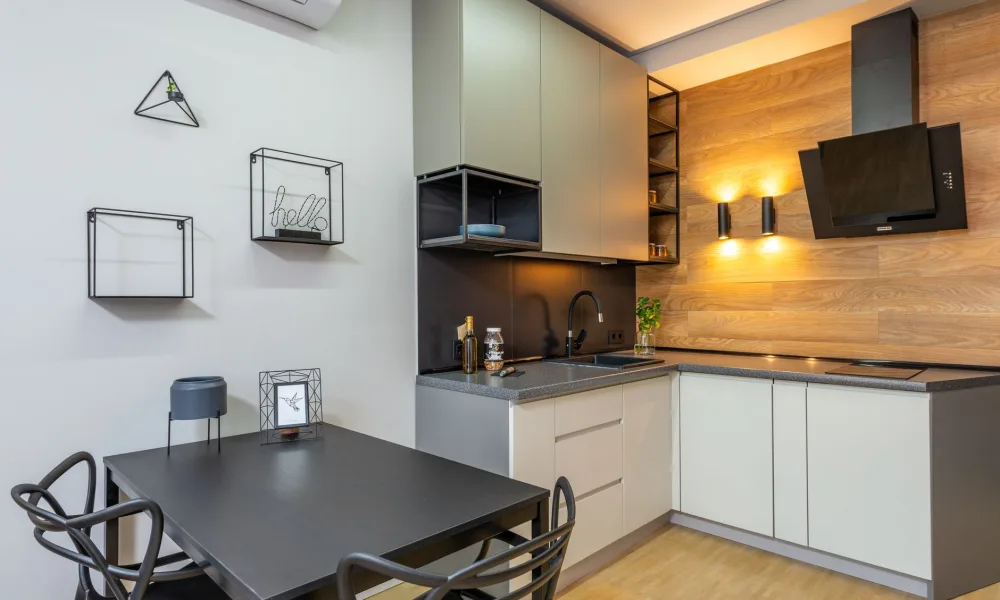
These are the units I would put in a bedroom, a studio, or an open one-room apartment without a second thought.
GoveeLife Smart Ice Maker
This one surprised me. It idles around 42 dB and the app lets you schedule cycles so it makes ice while you are out, not while you are trying to fall asleep. It pushes out about 24 pounds a day and holds roughly 40 to 45 ounces in the tank. The scheduling feature alone makes it my top pick for anyone sleeping in the same room.
Ecozy Countertop Ice Maker
The Ecozy runs a slower, larger fan that stays closer to 43 dB even during harvest. It has a self-cleaning cycle, which matters more than you would think for noise, since scale buildup makes the compressor work harder and louder over time. If you want to understand why that cycle helps, I broke down what a self-cleaning ice maker actually does in a separate piece.
The value tier: Silonn and Euhomy
A basic Silonn or Euhomy bullet maker sits around 45 to 48 dB. Not silent, but fine for a kitchen a room away from where you sleep. These are the ones I recommend for an apartment kitchen where the counter is the priority and the bedroom door closes.
Where the GE Profile Opal fits
The Opal makes nugget ice, not bullets, and it is a different animal. It is genuinely quiet at idle but the auger that chews the nugget ice can grind noticeably. It also costs three to four times what a bullet unit does. Lovely ice, but not the pick if silence and budget are your top two concerns.
If a model you like runs a touch loud, set it on a folded dish towel or a thin rubber mat. That single change cut the vibration hum on my counter by a clear margin and stopped the machine from buzzing against the countertop.
A checklist for a quiet setup
Where and how you place the unit matters almost as much as which one you buy.
- Put a rubber mat or towel under the machine to kill vibration.
- Keep it off a hollow cabinet or a wobbly cart that amplifies buzz.
- Leave 4 to 6 inches of clearance around the vents so the fan does not strain.
- Use the timer or app to run cycles during the day, not overnight.
- Empty the basket before bed so a full batch does not drop onto a hard, empty tray.
The mistake that makes a quiet unit loud
Here is the one I see constantly: people let the basket fill completely, then wonder why the machine gets louder over a few days. A full basket means the harvested ice has less give, and a jammed sensor can send the unit into a noisy retry loop where the fan and compressor cycle over and over.
Hard water makes it worse. Scale slows the freeze plate, the cycle lengthens, and the compressor runs hotter and louder. If your tap is hard, stay on top of descaling, which I cover in more depth for ice maker upkeep in hard water areas. The U.S. Geological Survey has a plain rundown of what water hardness actually is if you want to check your region.
How noise trades off against output
The quietest units are rarely the fastest. A machine tuned for low fan speed usually takes 8 to 12 minutes per batch instead of 6. Over a full day that can mean a few fewer pounds of ice.
For a studio or a bedroom, that trade is worth it. If you are hosting and need volume, you may want a faster, slightly louder unit and just run it during the party. It helps to know your real daily ice output before you settle on a model, because a quiet machine that only makes 18 pounds a day may not keep up if you drink a lot of iced coffee.
Do not buy a unit rated below 40 dB expecting silence. That number almost always refers to idle, and no bullet maker is truly silent during a harvest drop.
Making the call
If you sleep, work, and cook in one room, prioritize a unit with scheduling and a slow fan, like the GoveeLife or the Ecozy, and give it a rubber mat and a little breathing room. Expect a soft 42 to 45 dB hum and an occasional clatter when a batch drops, and plan to run it during the day. A value pick from Silonn or Euhomy is perfectly fine if a closed door sits between you and the machine.
Quiet is real here, but it is quiet with an asterisk. Manage the placement, keep the basket from overflowing, and stay ahead of scale, and even a mid-priced bullet maker will fade into the background of a small space instead of ruling it.
Frequently asked questions
A quiet unit idles around 40 to 45 dB, which feels like a soft fridge hum. The quietest bullet makers I have tested, like the GoveeLife and Ecozy, hover near 42 to 43 dB. Keep in mind that the harvest drop briefly spikes a few decibels above the idle number.
You can, but I would use a model with a timer or app so it makes ice during the day instead. Even a quiet unit clatters when it drops a batch of ice, and that sound can wake a light sleeper. Emptying the basket before bed also softens the noise.
The usual causes are a full basket that jams the sensor and scale buildup from hard water. Both make the machine cycle harder and run the fan and compressor longer. Empty the basket regularly and descale on schedule to bring the noise back down.
The Opal is quiet at idle, but its auger grinds the nugget ice, which some people find noticeable. It also costs several times more than a basic bullet maker. If silence and budget are your top priorities, a slow fan bullet unit is the better fit.
Yes, more than you would expect. A rubber mat or folded towel absorbs the vibration that otherwise buzzes through a hard countertop. It will not silence the fan, but it noticeably calms the low hum.

About the Author
Madhu Malhotra
Madhu Malhotra reviews nugget ice makers, countertop units, and portable freezers with a focus on real world durability. Over more than ten years of testing home ice machines she has learned which build details actually hold up, how to keep water lines clean without harsh chemicals, and what the marketing brochures quietly leave out. Her write ups aim to save readers a return trip and a wasted weekend.
Related guides

Fixing a Plastic Taste From Countertop Ice Makers
A room by room fix for lingering plastic taste, from vinegar flush cycles to airing the reservoir, so your bullet ice finally tastes like nothing.
Running a Portable Ice Maker Off a Battery Bank
How to run a portable ice maker off a power station without tripping it, plus the watt-hour math that stretches a charge on a camping weekend.

Why Your First Portable Ice Maker Batch Tastes Off
Your new machine works fine. The plasticky first batch is factory residue, and a couple of throwaway cycles fixes it.