
Why Your First Portable Ice Maker Batch Tastes Off
Your new machine works fine. The plasticky first batch is factory residue, and a couple of throwaway cycles fixes it.
Key takeaways
- A plasticky or metallic first batch is factory residue and unseasoned metal, not a defective machine.
- Run and discard the first 2 to 3 batches before drinking the ice, and add one extra on budget units.
- Wipe the tank and run one vinegar or lemon cycle before your first real batch to cut residue faster.
- Use filtered or bottled water so hard water minerals do not mask when the machine has cleared.
- Cloudy hollow cubes are normal bullet ice and have nothing to do with the residue taste.
The first bullet ice out of my Igloo ICEB26 smelled faintly like a new shower curtain. I dropped a couple of cubes in a glass of water, took a sip, and got that flat, plasticky taste on the back of my tongue. My first thought was that I had bought a lemon.
I had not. That plasticky or slightly metallic hit from a portable ice maker first batch is one of the most common panics I hear about, and it is almost never a defective unit. It is the machine shedding its factory coat.
So let me answer the questions people actually ask me when this happens, in the order they usually ask them.
Why does the first batch taste plasticky or metallic?
Two things are happening at once, and both are normal for a brand new unit.
The first is residue. These machines ship with trace oils, mold-release compounds, and plastic off-gassing baked into every surface the water touches: the reservoir, the pump line, the metal freezing prongs, the ice basket. None of that is dangerous in the amounts involved, but it absolutely coats the first water you run through, and ice is very good at picking up faint flavors.
The second is the metal itself. Units like the Silonn and the Euhomy freeze water on stainless steel prongs, and a fresh, unseasoned metal surface can lend a thin metallic edge to the first cube or two before it settles.
The result is that plasticky-to-metallic taste. It clings hardest to that very first cycle because the residue is at its heaviest right out of the box.
This is not the same as a machine that has tasted like plastic for weeks. New-unit residue clears in a day. A lingering plastic taste on an older machine is a cleaning problem, which I cover in my walkthrough on fixing a plastic taste from countertop ice makers.
Is the first ice actually safe to eat?
Honestly, a stray cube that ends up in your mouth is not going to hurt you. The residue is food-contact plastic, not poison.
But safe and pleasant are two different things, and I would not serve that first batch to anyone. The taste is off, and there is no reason to drink something that tastes like a bag when a fix takes twenty minutes. Toss it and move on.
If you want a plain-English baseline for what your source water should be before it ever hits the machine, the CDC guidance on healthy water is a sensible place to start.

How many batches should I run and toss?
This is the real question, so here is my straight answer: run and discard at least the first two full batches, and often three, before you drink the ice.
On most portable units a batch is a tray of nine bullets that drops in roughly 7 to 15 minutes depending on your selected cube size. So two or three batches is somewhere around 30 to 45 minutes of the machine running while you throw the ice straight into the sink.
My rule of thumb, machine by machine:
| Model type | Example units | Batches to toss | Rough time |
|---|---|---|---|
| Standard bullet portable | Igloo ICEB26, Silonn | 2 to 3 | 25 to 45 min |
| Budget bullet portable | Euhomy, generic Amazon units | 3 | 35 to 50 min |
| Larger countertop bullet | Newair, Frigidaire EFIC237 | 2 | 25 to 35 min |
Cheaper units tend to need one extra throwaway cycle, in my experience, because the plastics are lower grade and off-gas a little more. When in doubt, run one more batch than you think you need. Ice is cheap to remake.
Do not just eyeball the ice. Taste-test after the second batch by melting a cube in a spoon and tasting the water, not by crunching a cold cube. Cold dulls your tongue and hides the residue. Warm melt water tells you the truth.
Should I wash it before the first run?
Yes, and this is the step most people skip. A quick manual clean before you ever make ice knocks out a big chunk of the residue and cuts down how many batches you waste later.
Here is the routine I run on every new machine:
- Wipe the reservoir, ice basket, and scoop with a soft cloth and warm soapy water, then rinse well
- Fill the tank with a mix of water and a splash of white vinegar or lemon juice, then run one full cycle
- Dump that vinegar ice, drain the tank completely, and wipe it dry
- Refill with clean filtered water and run your two or three throwaway batches
The vinegar or lemon step is the one that does the heavy lifting on that metallic edge. It cuts the residue on the metal prongs faster than plain water alone. If your unit has one, a self-clean cycle does the same job, and I explain what that button actually does in my piece on self-cleaning countertop ice makers.
What water should I use for those first batches?
Use filtered or bottled water for the seasoning batches and for daily use after. Tap water works, but if your area runs mineral-heavy, hard water layers a chalky or slightly bitter note on top of the factory taste and makes it harder to tell when the machine has actually cleared.
Hard water is also the thing that scales up your prongs over the following weeks and brings the off taste back, so it is worth knowing where you stand. The USGS explainer on water hardness is a fast way to check your region, and I go deeper on upkeep in hard water areas in my notes on countertop ice maker upkeep in hard water.
Filtered water in, better ice out. It is the single easiest habit to build on day one.
Why is the first batch cloudy and hollow too?
People often notice the taste and the look at the same time and assume they are the same problem. They are not.
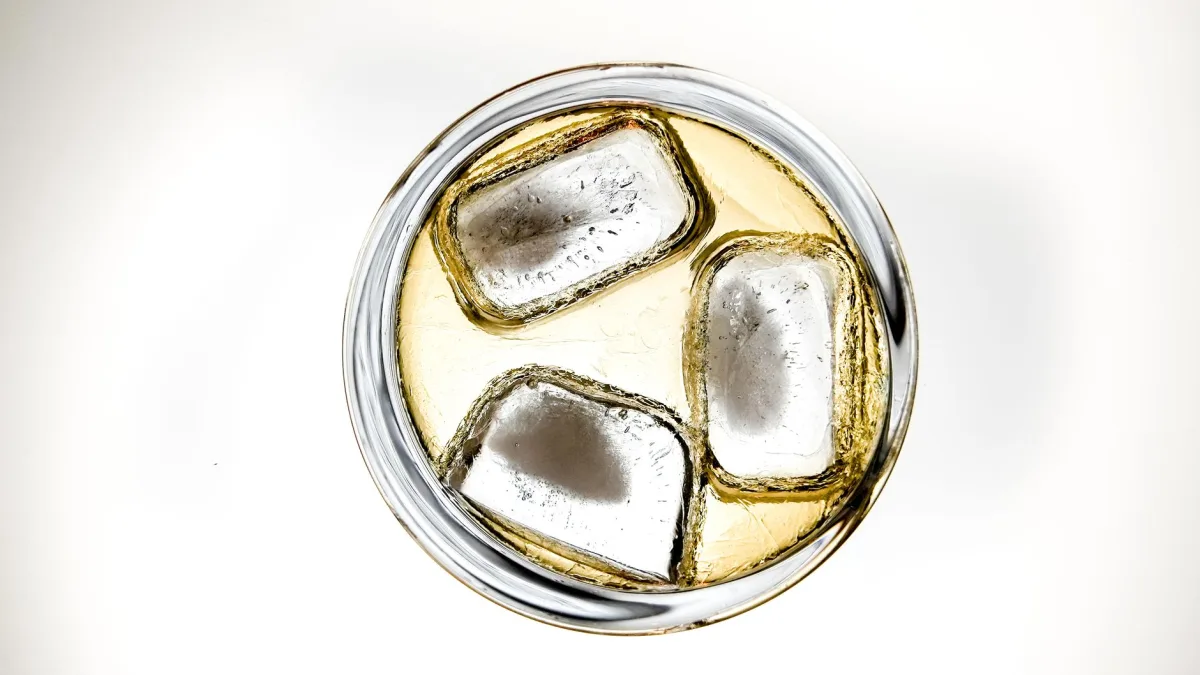
The cloudy, hollow shape of bullet ice is just how these machines freeze. Water freezes fast on the outside of a chilled prong and the center stays hollow, trapping air and minerals that make the cube look milky. That is normal on batch one and batch one hundred, and it has nothing to do with the residue taste. I break down the why in why countertop ice makers make hollow bullet ice.
So if your ice looks cloudy after you have cleared the taste, do not keep tossing batches chasing clear cubes. Cloudy is the design, not a defect.
What else goes wrong on the first run?
The taste is the headline complaint, but a few setup slips make it worse or make people think the machine is broken.
Not letting a new unit sit upright for a few hours before first power-on is a big one. These have compressors, and running one right after it was tipped on its side in a delivery truck can throw a fault or make weak ice, which people then blame on flavor. I keep a full list of these in my rundown of portable ice maker setup mistakes to avoid.
Overfilling the reservoir past the max line is another, since it can send water where it should not go and leave a wet-plastic smell that reads as taste. If you want the mechanics of what is happening inside during all this, my primer on how countertop ice makers work lays out the freezing cycle step by step.
Making the call
A plasticky or metallic first batch is not a reason to pack the box back up and return it. It is the machine doing exactly what a new machine does: shedding its factory coat into the first water it touches.
Wipe it down, run a vinegar cycle, toss two or three batches of ice, and use filtered water. Do that and the taste is gone by the end of your first afternoon, and it stays gone as long as you keep the unit clean. Almost every off-taste return I have ever ordered turned out to be a machine that just needed those first twenty minutes of patience.
Frequently asked questions
For most units it clears within the first afternoon once you run and toss two or three batches. A quick pre-wash and a vinegar cycle speed it up. If a plastic taste is still there after a day of use and cleaning, that points to a cleaning or water quality issue rather than new-unit residue.
Yes. Wash the reservoir and basket with warm soapy water first, then run one cycle with a water and white vinegar mix before your plain throwaway batches. The vinegar cuts the residue on the metal prongs quicker than water alone. Using filtered water for these cycles also helps.
A stray cube will not harm you since the residue is food-contact plastic, not a toxic substance. That said, the taste is unpleasant and there is no reason to drink it when a fix takes about twenty minutes. Toss the first couple of batches and start fresh.
Nearly all of them do to some degree, including popular models like the Igloo ICEB26, Silonn, and Euhomy. Cheaper units tend to off-gas a little more and may need an extra throwaway batch. Higher-end machines often taste clean after just two cycles.
Cloudy, hollow bullet ice is simply how these machines freeze water on chilled prongs, trapping air and minerals in the center. It is not related to the residue taste and it does not go away with more batches. Cloudy cubes are the normal design, not a defect.
Yes. Wiping the tank, basket, and scoop and running one vinegar or self-clean cycle before making real ice removes much of the factory residue upfront. This means fewer wasted batches later and a cleaner taste sooner. It takes only a few minutes and is worth doing every time.

About the Author
Madhu Malhotra
Madhu Malhotra reviews nugget ice makers, countertop units, and portable freezers with a focus on real world durability. Over more than ten years of testing home ice machines she has learned which build details actually hold up, how to keep water lines clean without harsh chemicals, and what the marketing brochures quietly leave out. Her write ups aim to save readers a return trip and a wasted weekend.
Related guides
Running a Portable Ice Maker Off a Battery Bank
How to run a portable ice maker off a power station without tripping it, plus the watt-hour math that stretches a charge on a camping weekend.

Countertop Ice Maker for a Small Office Break Room
Sizing a plumbing free bullet maker for a ten person break room, from daily output to who refills the tank.
Countertop Ice Maker for Camping and Tailgates
The exact packing and setup checklist I use to run a portable ice maker at a campsite or tailgate without cooking the compressor or blowing a fuse.