
Fixing a Plastic Taste From Countertop Ice Makers
A room by room fix for lingering plastic taste, from vinegar flush cycles to airing the reservoir, so your bullet ice finally tastes like nothing.
Key takeaways
- New plastic and rubber off-gas a chemical smell for the first day or two, which the ice picks up.
- Run a one part vinegar to ten parts water flush, then rinse twice with clean water.
- Leave the reservoir open to air out, ideally overnight with a fan, to clear the smell faster.
- Test your tap water separately, since chlorine and minerals can be the real source of the taste.
- If plastic taste survives a week of daily use and a second flush, then suspect a bad unit.
The first time I fired up a new Silonn on my kitchen counter, the ice looked perfect. Clear-ish bullets, a satisfying rattle into the basket, ready in about seven minutes. Then I dropped a few into a glass of water and took a sip. It tasted like a shower curtain smells.
That plastic edge is the number one complaint I hear about a new machine, and a countertop ice maker plastic taste is almost always fixable at home. It is rarely a broken unit. It is a fresh unit that needs a proper break-in and a clean water path.
Here is the exact routine I run on every new machine that lands on my bench, plus how to tell when the smell is off-gassing you wait out versus a residue you flush out.
Why new machines taste like plastic in the first place
A countertop ice maker is a plastic tub, a plastic pump, silicone tubing, and a set of metal prongs the water freezes onto. All of that is brand new, and new plastic and rubber release a faint chemical smell as they cure. Manufacturers call it off-gassing.
The ice picks up that smell because it sits in the reservoir, gets pumped through the tubing, and freezes in direct contact with the parts. Cold water is also very good at grabbing odors. So the first several batches carry whatever the machine is shedding.
Most units settle down within the first day or two of use. If yours still tastes off after that, the problem has shifted from off-gassing to residue, and residue is what the flush below removes. I cover the very first batch in more detail in my piece on why the first portable ice maker batch tastes off, but the fix goes further than dumping one round.
The freezing prongs and pump are food-safe, but factory assembly leaves behind machine oils and mold-release compounds. That slick film is the real culprit behind a taste that will not quit.
What you need before you start
You do not need special cleaners. Distilled white vinegar and clean water do the heavy lifting, and a few of these units even ship with a small cleaning function built in, which I break down in my look at what self-cleaning countertop ice makers actually do.
- Distilled white vinegar, about one cup
- Fresh water, filtered or bottled if your tap is heavy
- A soft cloth or non-scratch sponge
- A small bottle brush for the tubing inlet
- Paper towels for drying
Set aside about an hour. Most of that is the machine running cycles while you do something else. Active work is maybe ten minutes.
The vinegar flush cycle, step by step
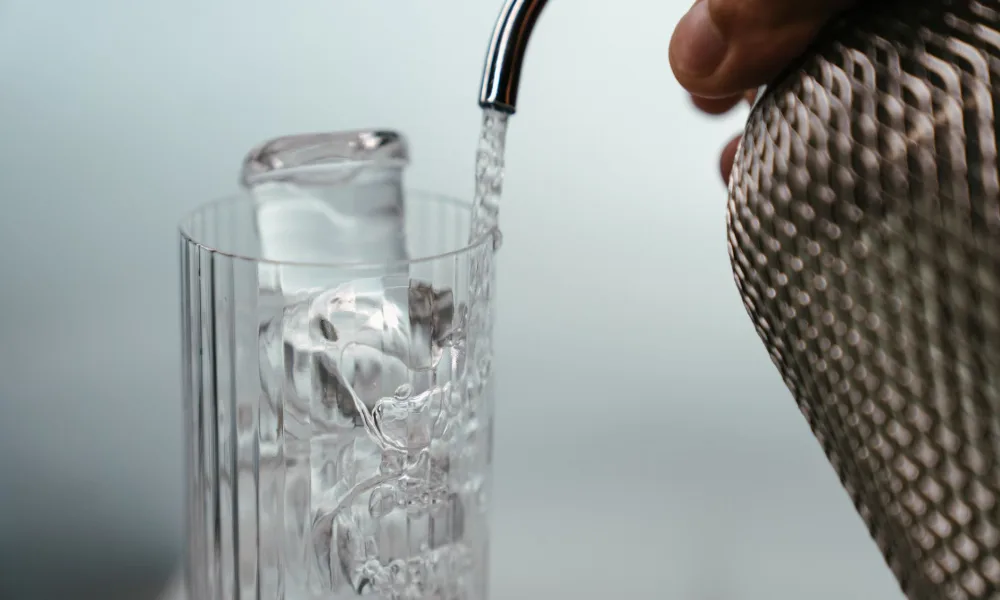
This is the core fix. It strips the factory film and cuts through any early mineral haze at the same time. I run this on a GE Profile Opal, a Frigidaire EFIC237, a Newair, and every no-name unit exactly the same way.
- Empty and unplug. Pour out any water and ice. Wipe the basket and lid with a dry paper towel to knock off loose dust from the box.
- Mix your solution. Fill the reservoir to the max line with a ratio of about one part vinegar to ten parts water. For a typical 2.5 quart tank that is roughly one cup of vinegar to the rest water.
- Run a full ice cycle. Plug in, start it, and let it make a batch of ice. Do not eat this ice. When the basket fills, hit the drain or just pour the vinegar water out.
- Dump the vinegar ice too. The bullets are now soaked in vinegar solution. Toss them and rinse the basket.
- Rinse cycle one. Fill with plain fresh water to the max line and run another full batch. Dump the ice and the water.
- Rinse cycle two. Do it again with fresh water. Two clean rinses matter more than people think. Vinegar tastes worse than plastic if you leave it behind.
Sniff the empty reservoir after your last rinse. If you still catch vinegar or plastic, run one more plain-water batch. Your nose is a better sensor here than the ice, which numbs your tongue with cold.
Air out the reservoir between cycles
Here is the step almost everyone skips. Plastic off-gasses faster in open air than sealed under a closed lid, so after the flush I leave the machine open to breathe.
Pop the lid, pull the basket, and set the unit somewhere with airflow for a few hours. Overnight is better. A running fan pointed at the open tank speeds it up noticeably.
I tested two identical Euhomy units side by side once. The one I left open overnight tasted neutral by morning. The one I sealed right after flushing still had a faint edge for two more days. Same machine, same water, different air.
The flush removes the residue. The air removes the smell. You need both.
Check your water source, not just the machine
Sometimes the machine is fine and the water is the problem. If your tap water tastes even slightly of chlorine or minerals, the ice concentrates that flavor and it reads as chemical or plastic-adjacent.
Try this test. Freeze a tray of the same water in your freezer and taste that ice next to a machine bullet. If both taste off, your water is the source, not the ice maker.
Hard water carries its own mineral taste and leaves scale that fouls the flavor over time, which is a longer battle I cover in keeping a countertop ice maker clean in hard water areas. For a quick win, switch to filtered or bottled water for a week and see if the taste clears. The EPA has a plain rundown of common water contaminants and treatment on its WaterSense pages if you want to understand what your tap is actually carrying.
| Water source | Taste risk | What I do |
|---|---|---|
| Filtered tap | Low | My default, cheap and clean |
| Unfiltered tap | Medium, varies by city | Fine if your tap already tastes good |
| Bottled spring | Low | Good for a taste test, pricey daily |
| Distilled | Very low | Cleanest, but flat and makes softer ice |
How long a new unit keeps off-gassing
With the flush and airing done, most machines taste clean within 24 to 48 hours. A stubborn unit can linger up to a week, especially cheaper models with more raw plastic inside.
If you are past a week of daily use and still tasting plastic, stop waiting it out. That is no longer off-gassing. Something is holding residue, usually the tubing or a corner of the reservoir the flush missed. Repeat the vinegar cycle and scrub the inlet with your bottle brush.
Running the machine often actually helps. Ice sitting idle for days picks up whatever is in the tank, so a unit in regular use clears faster than one that sits. If you are new to how these machines cycle water and freeze, my primer on how countertop ice makers work explains why the water path matters so much for taste.
The common mistake that keeps the taste around
The biggest error I see is people running one batch, tasting plastic, and giving up or returning the unit. One batch is not a break-in. It is barely a rinse.
The second mistake is a rushed vinegar rinse. Folks do the vinegar cycle, do a single quick water rinse, and then complain the ice tastes sour. That is leftover vinegar, not a defect. Always run two full water batches after the vinegar.
The third is sealing the lid the second the flush ends, trapping the smell inside. Give it air. If you are setting up your first machine, my list of portable ice maker setup mistakes to avoid covers these traps and a few others.
A simple maintenance rhythm that prevents it coming back
Once the taste is gone, a light routine keeps it gone. Plastic taste from a new unit is a one-time event, but musty or stale taste can return if you let water sit and grow film.
- Empty the reservoir when you are done for the day, do not leave standing water
- Wipe the tank dry and leave the lid cracked overnight
- Run a vinegar flush every two to four weeks, sooner in hard water
- Use filtered water if your tap runs heavy on chlorine or minerals
That is maybe five minutes a week. It also keeps the machine running quieter and freezing faster, since scale is what makes these units labor and slow down.
Where this leaves you
A plastic taste in fresh ice is normal, annoying, and almost always temporary. Run the vinegar flush, rinse twice with clean water, air out the open reservoir overnight, and check that your tap is not the real offender. Do those four things and the taste usually vanishes inside a day.
If it survives a full week of daily use and a second flush, then and only then would I suspect a genuinely bad unit worth returning. In three years of testing these machines, I can count those on one hand. Nearly every plastic taste I have chased came down to skipped rinses and a sealed lid, and both take minutes to fix.
Frequently asked questions
The off-gassing smell is unpleasant but not dangerous, so a stray bullet will not hurt you. That said, skip any ice made during a vinegar flush cycle, since it is soaked in cleaning solution. Once the taste is gone the ice is fine to use normally.
Aim for about one part distilled white vinegar to ten parts water. For a typical 2.5 quart reservoir that works out to roughly one cup of vinegar topped off with fresh water to the max line. Stronger is not better, since it just takes more rinsing to clear.
Sour usually means leftover vinegar, not plastic. It happens when you run the vinegar cycle and only do one quick water rinse. Run two full batches of plain fresh water after the vinegar, dumping the ice each time, and the sour taste clears.
I stick with vinegar because it rinses clean and leaves no lingering flavor. Dish soap is very hard to fully rinse out of the tubing and tends to make foamy, off-tasting ice. Avoid bleach entirely in a machine you make edible ice in.
Most units taste clean within 24 to 48 hours of a flush and some airing out. Cheaper models with more raw plastic can linger up to a week. If it lasts past a week of daily use, repeat the vinegar flush and scrub the tubing inlet.
Yes, more than most people expect. Ice concentrates whatever is in the water, so chlorine or heavy minerals read as a chemical or off taste. Freeze a tray of the same water in your freezer and taste it against a machine bullet to tell whether the water or the machine is at fault.

About the Author
Madhu Malhotra
Madhu Malhotra reviews nugget ice makers, countertop units, and portable freezers with a focus on real world durability. Over more than ten years of testing home ice machines she has learned which build details actually hold up, how to keep water lines clean without harsh chemicals, and what the marketing brochures quietly leave out. Her write ups aim to save readers a return trip and a wasted weekend.
Related guides
Portable Ice Maker for a Small Apartment Kitchen
How a countertop unit actually fits a plumbing-free galley kitchen, from counter inches to venting gaps to where it lives when you are not using it.
Portable Ice Maker Power Draw and Running Watts
What a countertop ice maker actually pulls from the wall, from its steady running load to the brief compressor jolt at startup.
Running a Portable Ice Maker Off a Battery Bank
How to run a portable ice maker off a power station without tripping it, plus the watt-hour math that stretches a charge on a camping weekend.