
How Nugget Ice Makers Make Soft Chewable Ice
The freezing and auger process that turns tap water into soft pebbles you can actually chew.

Key takeaways
- Nugget ice makers freeze a thin skin of ice on a cold cylinder rather than freezing solid cubes.
- An auger scrapes those flakes loose and pushes them up toward an extrusion head.
- Compression packs the flakes into soft pebbles that trap air and unfrozen water.
- The softness comes from that porous structure, not from any special water.
- Scale buildup from hard water is the main thing that slows or stalls these machines.
The first time I pulled a scoop of fresh ice out of my GE Profile Opal, I bit down out of habit and braced for that hard crack against my molars. It never came. The little pebbles gave way like slush that forgot to melt, and I finally understood why people get weirdly obsessed with this stuff.
Once I got curious about how nugget ice makers work, I stopped seeing a magic box and started seeing a small, clever machine doing two jobs at once. It freezes water into thin flakes, then squeezes those flakes into soft cylinders.
Here is the whole process, step by step, based on hours of listening to these things hum, whirr, and drop ice on my counter.
The short version of what happens inside
A nugget ice maker does not freeze a solid cube and then crush it. That is crushed ice, and it is a different animal.
Instead, it grows a thin layer of ice on the inside wall of a very cold metal cylinder, scrapes that layer off as soft flakes, and then presses the flakes together into little chewable pieces. The softness comes from air and unfrozen water trapped between the flakes, not from any special water.
Nugget ice is roughly the same ice you get at a Sonic drive-in or a hospital cafeteria. The machines cost more than a basic cube maker because the flaking and pressing hardware is more involved.
Step 1: Water gets pumped to a freezing chamber
It starts in the reservoir. On an Opal 2.0 you fill a tank that holds a little over three quarts, and a small pump lifts that water up into the freezing chamber at the top of the machine.
Most countertop models recirculate. Water that does not freeze on the first pass drips back down and gets pumped up again, which keeps waste low. If you want the full picture on how little water actually leaves the loop, I broke that down in my piece on how nugget makers reuse water through recirculation.
The pump and the reservoir are the boring part, but a clogged pump is the number one reason a machine stops making ice, so keep that water clean.
Step 2: A chilled cylinder grows a thin sheet of ice
Here is the heart of it. Inside the freezing chamber sits a hollow metal cylinder, usually stainless steel. A refrigeration system runs cold refrigerant around the outside of that cylinder, dropping its wall temperature well below freezing.
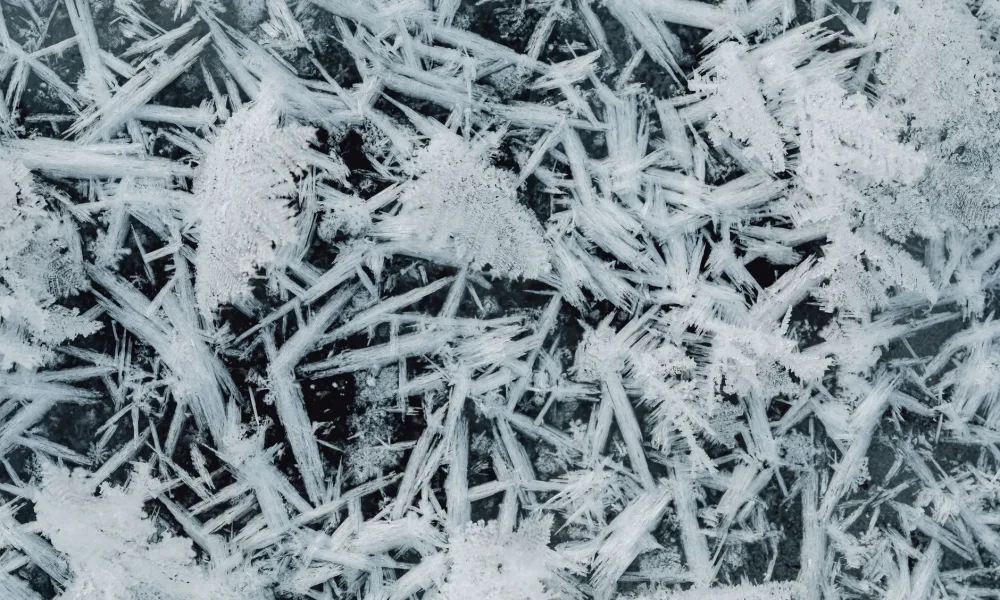
Water flows against the inner wall. As it touches that frigid surface, a thin skin of ice forms almost immediately, maybe a millimeter or two thick.
This is not a fast, thick freeze. It is a slow, shallow one, and that matters. Thin ice stays soft and full of tiny gaps, which is exactly what you want for chewable nuggets.
Step 3: An auger scrapes the flakes loose
Now for the part that makes the noise. Running up the center of that cylinder is an auger, a metal screw that looks like a giant drill bit. A motor turns it slowly.
As the auger rotates, its edges scrape the fresh ice skin off the cylinder wall before it can thicken into a hard cube. Those scrapings are soft, wet flakes, closer to shaved ice than anything solid.
The auger does double duty. Its screw shape also pushes the loose flakes upward, moving them out of the freezing zone and toward the top of the chamber.
The auger is basically a cheese grater and a conveyor belt sharing one part.
That slow grinding sound you hear every 30 to 60 seconds? That is the auger doing its job. It is normal. A grinding that turns into a harsh scraping or a stall usually means low water or a scale buildup.
Step 4: The flakes get compressed into nuggets
Soft wet flakes are not nuggets yet. The final step is compression.
At the top of the chamber, the flakes get forced through a small extrusion head with narrow openings, sometimes called a breaker or a nozzle plate. As the flakes squeeze through those holes, the pressure packs them together and squeezes out excess water.
What comes out the other side is a continuous rope of packed ice. A little cutter or the sheer force of extrusion snaps that rope into the short cylinders you recognize as nugget ice.
The pieces are dense enough to hold their shape in a drink but soft enough that your teeth sink right in. That balance is the whole point.
Fresh nuggets are wetter and softer straight out of the chute. If you let a batch sit in the bin for 20 minutes, the pieces firm up slightly as surface water drains and refreezes. Some folks prefer them fresh, some prefer them rested.
Why the ice is soft instead of hard
People assume there is a secret ingredient. There is not. The softness is pure physics.
A regular ice cube freezes slowly into one solid, clear block with no air inside. Nugget ice is the opposite: it is a bunch of thin flakes pressed together, so it is riddled with microscopic pockets of air and trapped water.
Those pockets are weak points. When you bite, the piece crumbles along all those little seams instead of resisting like a solid cube. That same porous structure is why nugget ice soaks up the flavor of whatever you pour over it.
- Thin flakes instead of thick cubes
- Air and water trapped between the flakes
- Light compression that packs without fully fusing
- The result: soft, porous, chewable pebbles
How long the whole cycle takes
From a dry start, most countertop machines take a while to cool the cylinder and drop the first batch. On my Opal that first ice shows up in roughly 15 to 20 minutes, and the machine hits a steady rhythm after that.
Once it is warmed up and running, the flake, scrape, and extrude steps happen continuously, dropping a small handful of nuggets every minute or so. I timed the ramp-up in detail in my write-up on nugget ice maker batch time and first ice if you want real numbers.
Daily output lands somewhere between 24 and 34 pounds for popular home units like the Opal, Frigidaire EFIC237, and Newair models, though real-world numbers depend on room temperature and how often you empty the bin.
| Stage | What happens | Part involved |
|---|---|---|
| 1. Pump | Water lifted from tank to chamber | Pump and reservoir |
| 2. Freeze | Thin ice skin forms on cold wall | Chilled cylinder |
| 3. Scrape | Flakes scraped loose and pushed up | Auger |
| 4. Compress | Flakes squeezed into nuggets | Extrusion head |
The parts that actually wear out
Knowing the process helps you spot trouble. The auger motor, the pump, and the extrusion head are the pieces that take the most abuse.
Scale is the quiet killer. Minerals in hard water leave deposits on the cold cylinder and inside the auger housing, which makes the auger work harder and slows freezing. If your tap runs hard, you can check your local supply against the USGS explainer on water hardness, and either filter your fill water or run the cleaning cycle more often.
That is exactly why the self-clean routine exists. I walked through what it actually does in my guide to the nugget ice maker self-clean cycle, and running it every week or two keeps the auger turning smoothly.
The common mistake I see: people use warm or hot water thinking it speeds things up. It does the opposite. The machine has to chill that water first, so warm water just makes the cylinder work harder and slows your first batch. Fill with cold water.
Where this leaves you
Once you picture the four moving ideas, freeze thin, scrape loose, push up, press together, a nugget ice maker stops feeling mysterious. It is a cold cylinder, a spinning auger, and a little squeeze at the end, repeated over and over.
That design is why the ice is soft, why the machine hums the way it does, and why keeping the water clean matters so much. If you are still deciding whether the whole setup earns a spot on your counter, my broader nugget ice maker guide lays out the tradeoffs, and my honest take on whether one is worth it for chewers gets into the daily reality of owning one.
Frequently asked questions
No. Regular cold tap water works fine, and the softness comes from the flaking and compression process, not the water. Filtered or softer water mainly helps by leaving less scale inside the machine, which keeps it running longer between cleanings.
The grinding sound is the auger scraping fresh ice off the cold cylinder and pushing the flakes upward. A regular rhythmic grind every 30 to 60 seconds is normal. A harsh scraping, a stall, or a sudden change usually points to low water or scale buildup.
Crushed ice is a solid cube smashed into jagged shards, so it stays hard. Nugget ice is thin frozen flakes compressed into soft cylinders, so it is porous and chewable. The nugget process never freezes a solid block in the first place.
From a cold start the machine has to chill the metal cylinder down well below freezing before any ice can form. On most countertop units that takes about 15 to 20 minutes for the first batch. After that it settles into a steady rhythm and drops ice continuously.
The auger is the metal screw running up the center of the freezing cylinder that scrapes flakes loose and moves them upward. It is one of the parts most likely to wear or seize from scale over time. On many models it can be cleaned or replaced, though access varies by brand.
No, it slows things down. The machine has to remove all the heat from the water before it can freeze, so warm or hot water forces the cylinder to work harder and delays your first batch. Always fill the reservoir with cold water.

About the Author
Madhu Malhotra
Madhu Malhotra reviews nugget ice makers, countertop units, and portable freezers with a focus on real world durability. Over more than ten years of testing home ice machines she has learned which build details actually hold up, how to keep water lines clean without harsh chemicals, and what the marketing brochures quietly leave out. Her write ups aim to save readers a return trip and a wasted weekend.
Related guides
GE Profile Opal Nugget Ice Maker Explained
The Opal put nugget ice on home counters. Here is how the line works, why it caught on, and how its generations differ.
How Much Nugget Ice a Maker Produces Per Day
Most nugget makers advertise 24 to 38 pounds a day, but the number you actually keep on hand is smaller. Here is why, and what to expect.
Ecozy Nugget Ice Maker: Quiet Pebble Ice
A plain look at what the Ecozy nugget ice maker does well: quieter cycles, a self-clean button, and soft pebble ice by the bowlful.