
Countertop Ice Maker Upkeep in Hard Water Areas
A simple water and cleaning routine that keeps bullet ice clear and cycles fast when your tap runs hard.
Key takeaways
- Hard water minerals coat the freezing spikes, which clouds bullet ice and slows every cycle.
- Filtered water is the single biggest fix, and distilled is best for a clear special batch.
- Swap the tank water daily and wipe the reservoir weekly to catch scale as a film, not a crust.
- A monthly ten to one vinegar rinse keeps the pump clear without a full descaling repair.
- Slow ice in hard water usually means clean me, not a failing compressor.
The first countertop ice maker I ran on my old apartment’s tap water lasted about three weeks before the ice started coming out cloudy and slightly gritty. The machine was a Silonn, and nothing was broken. My water was just hard, loaded with calcium and magnesium, and those minerals were quietly coating the freezing spikes inside.
If you have ever pulled a batch of ice that looked chalky or noticed cycles creeping from nine minutes up to fifteen, hard water is usually the reason. A countertop ice maker in a hard water area needs a slightly different habit than one sitting in a soft water town.
The good news: it is a light routine, not a repair project. Here is exactly what I do to keep a portable unit clear and quick.
Why hard water clouds your ice and slows the machine
Portable ice makers freeze water on metal spikes, called the evaporator, that dip into the tank. Water climbs those spikes, freezes into hollow bullet shapes, then drops off and the cycle repeats. It is a fast, repetitive process, and it runs dozens of times a day.
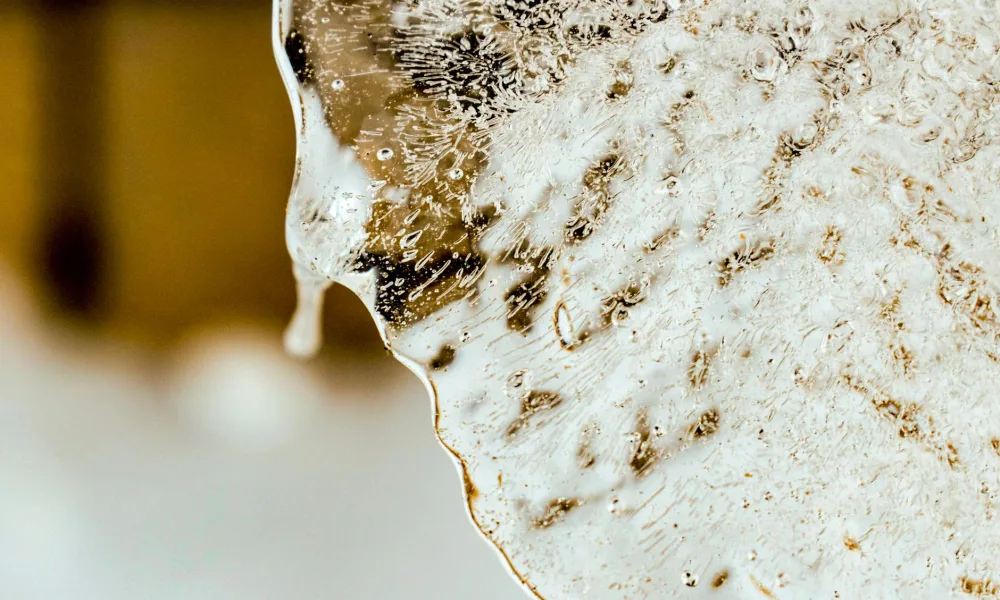
Hard water carries dissolved minerals. The U.S. Geological Survey has a good plain explainer on what makes water hard, but the short version is that calcium and magnesium do not freeze into the ice. They get left behind on the spikes and in the pump as a thin white scale.
That scale does two things. It insulates the freezing spikes, so each cycle takes longer to make the same ice. And it flakes into the water, which is why the bullets turn cloudy and sometimes taste faintly metallic. If you have wondered why these machines make hollow bullet ice in the first place, the same spike system is what scale gums up.
Cloudy ice from scale is different from the normal cloudiness inside every bullet. Countertop machines freeze fast, which traps tiny air bubbles and makes ice look white even with perfect water. Scale cloudiness sits on the surface and rinses off gritty.
The water you pour in matters more than the machine
I have tested a Frigidaire EFIC237, a Newair, and a GE Profile Opal side by side, and the single biggest factor in ice quality was not the price of the unit. It was the water going in.
You have three realistic options for a hard water home.
| Water source | Clarity and taste | Scale buildup | Cost and hassle |
|---|---|---|---|
| Hard tap, straight | Cloudy, gritty, metallic within weeks | Fast, heavy | Free, but frequent cleaning |
| Filtered (pitcher or fridge) | Noticeably clearer, cleaner taste | Slower | Cheap, easy, my default |
| Distilled or reverse osmosis | Clearest, most neutral taste | Very slow | A few dollars a gallon or an RO tap |
For daily use I run a basic carbon pitcher filter. It does not remove the hardness minerals fully, but it cuts them enough to stretch the time between cleanings from three weeks to closer to two months. For a special batch, say clear ice for a party, I keep a jug of distilled around.
A cheap water hardness test strip from a hardware store tells you what you are dealing with. Anything above 120 mg/L (roughly 7 grains per gallon) counts as hard, and that is when a filtered water habit really pays off.
How to set up a hard water routine from day one
Starting the habit before scale builds is far easier than fighting it later. Here is the order I follow with any new unit.
- Run one full batch on filtered water and toss it. New machines and mineral residue both leave a first batch tasting off, which I cover in why the first batch tastes strange.
- Set a reminder to change the water in the tank every day you use it, rather than topping off a tank that has been sitting.
- Empty and dry the tank whenever you will not use the machine for more than a day. Standing hard water leaves the worst rings.
- Wipe the reservoir and the spikes with a soft cloth once a week. This catches scale while it is still a film, not a crust.
That daily water swap is the step people skip, and it is the one that matters most. Minerals concentrate as water freezes off, so a tank you keep refilling without draining gets harder and harder over the day.
The weekly wipe that keeps the pump clear
The pump is the part that fails first in hard water. It pushes water up over the spikes, and when scale narrows its path, the machine either slows down or throws a water flow error.
My weekly routine takes about five minutes. I unplug the unit, drain the tank through the plug, and wipe the reservoir walls and the freezing spikes with a damp microfiber cloth. If I feel any grit, I go over it again. Then I leave the lid open for an hour so it dries fully.
- Unplug and drain the tank completely
- Wipe the reservoir walls and freezing spikes
- Check the pump inlet for white film
- Rinse with filtered water, not hard tap
- Air dry with the lid open
Drying matters as much as wiping. A tank left wet grows the pink and black film that shows up in these machines, and I walk through preventing that in the guide to fixing off tastes in the ice. Scale and slime feed on the same neglect.
A light monthly descale, not a full teardown
The weekly wipe handles the surface. Once a month, or when cycles feel slow, I run a gentle descale to clear what the cloth cannot reach inside the pump.
I mix a solution of one part white vinegar to ten parts water, or use the ice machine cleaner the manufacturer recommends. Pour it into the tank up to the fill line, run the machine on a clean or wash cycle if it has one, or let it cycle two or three times making ice you will throw out. The mild acid dissolves the scale. Then I run two full batches of plain filtered water to rinse, and I toss both.
Do not use a stronger vinegar mix hoping to work faster. Too much acid can attack seals and the pump gaskets over time. Ten to one is plenty for the thin scale that a monthly rhythm produces, and it keeps you out of full descaling repairs.
This is the whole point of staying light and regular. If you let scale crust for six months, you are into soaking parts, scrubbing the pump, and sometimes replacing it. A monthly rinse keeps you in maintenance territory instead.
A common mistake I made early on
When my first machine slowed down, I assumed the compressor was dying and almost returned a perfectly good Euhomy. The real problem was a chalky pump inlet I had never looked at.
The mistake was treating slow cycles as a hardware failure instead of a cleaning signal. In a hard water area, a machine that made ice in ten minutes and now takes sixteen is almost always telling you it needs a descale, not a replacement.
Slow ice in hard water is a message, not a malfunction. Clean it before you blame it.
I check three things before I ever suspect the mechanics: is the tank scaled, is the pump inlet filmed over, and when did I last descale. Nine times out of ten one of those answers explains it. Understanding how countertop ice makers actually work made me a lot calmer about these slowdowns.
When a filter or softener is worth it
If your water is very hard, above roughly 180 mg/L, the daily jug of filtered water gets old. That is when an inline filter or a small under-sink setup starts to make sense.
I would not plumb a countertop unit into anything, since the whole appeal is that it is portable. But feeding it from a filtered tap or a reverse osmosis faucet you already have takes the mineral load off the machine entirely. Some people in genuinely hard areas find it worth keeping a five gallon jug of RO water just for the ice maker.
The EPA’s WaterSense program has readable background on water quality and efficiency if you are weighing a whole-home filter. For most renters, though, a pitcher filter and the routine above is more than enough.
Where this leaves you
Hard water does not ruin a countertop ice maker. It just changes the maintenance from occasional to regular, and the whole routine adds up to about ten minutes a week plus a monthly rinse.
Pour filtered water, swap the tank daily, wipe it weekly, and descale gently once a month. Do that and your bullets stay clear, your cycles stay quick, and the pump keeps pushing for years instead of clouding up in a season. The machine was never the weak point. The water was, and that part is fully in your hands.
Frequently asked questions
You can, but you will spend more time cleaning it. Hard tap water clouds the ice and scales the pump within a few weeks. Filtered water from a simple pitcher cuts the buildup enough to stretch cleanings from every few weeks to closer to every two months.
Distilled makes the clearest, most neutral ice because almost all minerals are removed. It also causes the least scale. For daily use most people find a carbon filter is enough, and they save distilled for a special clear batch since it costs a few dollars a gallon.
About once a month, or sooner if cycles start slowing down. Use a ten to one white vinegar to water mix or the maker's recommended cleaner, run it through, then rinse with two batches of plain filtered water. Regular light descaling avoids the crusted buildup that needs a full teardown.
Scale has likely narrowed the pump inlet or coated the freezing spikes, so each cycle takes longer. Before assuming the compressor failed, check the tank and pump for white film and run a descale. In hard water, a machine going from ten minutes to sixteen almost always just needs cleaning.
Not if you stay ahead of it. The harm comes from scale that builds for months until it crusts on the pump and seals. A weekly wipe and monthly rinse keep it as a removable film, so the unit lasts for years rather than failing in a season.
It reduces the calcium and magnesium that cause scale, so yes, softened water makes ice clearer and slows buildup. That said, softeners add sodium, which some people dislike in drinking water. For a countertop unit alone, a pitcher filter or reverse osmosis tap is usually the simpler, cheaper route.

About the Author
Madhu Malhotra
Madhu Malhotra reviews nugget ice makers, countertop units, and portable freezers with a focus on real world durability. Over more than ten years of testing home ice machines she has learned which build details actually hold up, how to keep water lines clean without harsh chemicals, and what the marketing brochures quietly leave out. Her write ups aim to save readers a return trip and a wasted weekend.
Related guides

Portable Ice Maker Dual Ice Sizes, Small vs Large
The small and large buttons on a portable ice maker change more than cube size, and here is which one actually fits your glass or your cooler.
Portable Ice Makers for RV and Van Life Setups
How a small portable ice maker rides along on a road trip, from securing it while driving to power draw and refills that fit a limited RV water tank.
Why Countertop Ice Makers Make Hollow Bullet Ice
The open center in your bullet ice is a design feature, not a defect, and here is how to tell normal hollowness from a real problem.