
How Much Ice Per Day Do You Actually Need
A simple sizing method that turns your household and drink habits into a daily pounds target, then matches it to real machine outputs.

Key takeaways
- Size by daily pounds, not the box rating: about half a pound of ice per standard drink, three quarters for big tumblers.
- Track two numbers, your daily average and your party peak, because the peak is what runs you short.
- Rated 24-hour output assumes ideal conditions and an empty bin, so real available ice is usually lower on bullet units.
- Match tank size to distance from a faucet: it barely matters near a sink, a lot in an RV or garage.
- Most families are better served by a nugget like the Opal than a higher-rated bullet because the insulated bin holds ice.
Last summer I watched a friend fill his brand new bullet ice maker three times in one afternoon and still run short before the burgers came off the grill. He had bought the machine on a whim, never asked how much ice per day you need for a backyard of eight thirsty people, and ended up making a gas station run at 4 p.m. It was the exact moment that convinced me most ice maker regret is really a sizing problem.
The good news is that this is easy math. You do not need a spreadsheet or a chemistry degree. You need a rough count of drinks, a sense of how often you host, and one honest look at how you actually use ice.
Below is the method I use whenever someone asks me to help them shop. It works for a solo apartment and a house that throws a party every other weekend.
Start with a daily pounds target, not a headline number
Manufacturers love to print a 24-hour output on the box: 24 lbs, 26 lbs, sometimes 44 lbs. Those numbers are real but they answer a question most people are not asking. What you want is the opposite direction. Figure out how many pounds your household goes through on a normal day, then shop for a machine that clears it comfortably.
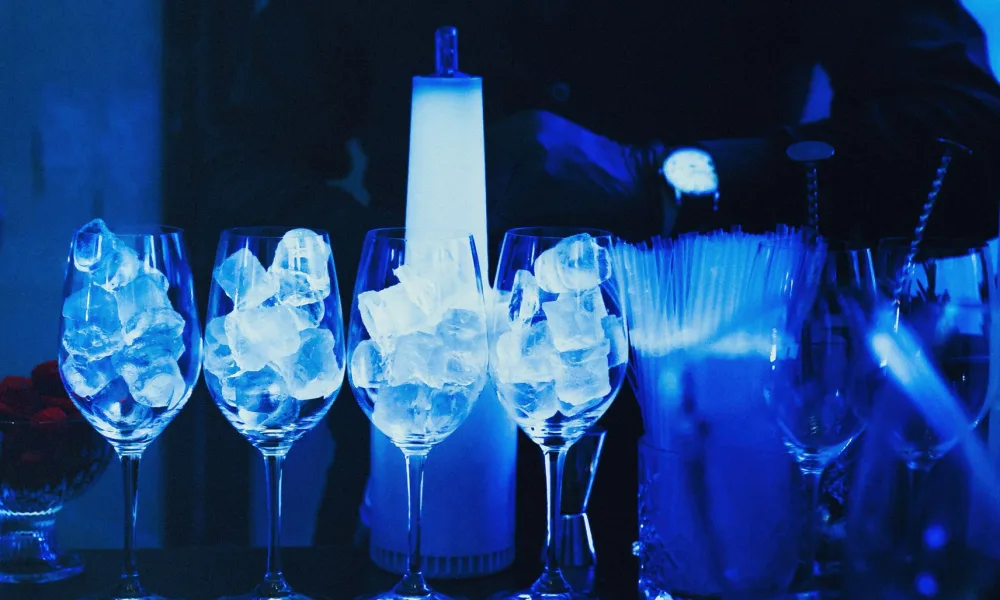
A single glass of iced water or soda uses roughly half a pound of ice. A tall tumbler packed for cold brew or a cocktail runs closer to three quarters of a pound. Keep those two anchors in your head and the rest falls into place.
Weigh it once if you want to be sure. Fill your usual glass with ice, dump it on a kitchen scale, and note the ounces. Most people are surprised it lands between 6 and 10 ounces per drink.
The three-part formula I actually use
Here is the whole thing. It takes about two minutes with a phone calculator.
- Count daily drinks. Add up every iced drink your household pours on a typical weekday. Two adults who each have coffee, a lunch soda, and a water with dinner land around six drinks.
- Multiply by drink weight. Use half a pound for standard glasses, three quarters of a pound for big tumblers and blended drinks. Six standard drinks is about 3 lbs a day.
- Add a party buffer. If you host, estimate guests times 1.5 lbs for a two to three hour gathering, then divide across your week. A monthly party for ten is 15 lbs spread thin, but you still want a machine that can produce that in an afternoon.
That last line is the part people miss. Your daily average and your peak demand are two different targets, and the peak is what ruins parties.
Turn your target into a machine class
Once you have a daily pounds number and a peak number, matching hardware is straightforward. I sort machines into three buckets based on real 24-hour output I have measured or trust from testing.
| Daily target | Machine class | Real examples |
|---|---|---|
| Under 3 lbs | Small bullet countertop | Silonn, Euhomy, Igloo self-cleaning bullet (26 lbs rated) |
| 3 to 6 lbs, some hosting | Nugget countertop | GE Profile Opal (24 lbs), Frigidaire EFIC237 (26 lbs bullet) |
| 6 lbs plus, frequent parties | High-output or undercounter | Newair 50 lb, undercounter units at 40+ lbs |
Notice the Opal is rated lower than a cheap bullet unit at 24 lbs versus 26 lbs, yet I steer most families toward the nugget. The reason is the reservoir and the ice itself, which I get into next. If you want the full framework beyond sizing, my guide to choosing an ice maker walks through noise, water, and footprint too.
Why rated output lies to you
A 26 lb rating assumes ideal conditions: cold incoming water, a cool room, and someone emptying the bin the second it fills. Bullet machines have no freezer, so ice sitting in the basket slowly melts back into the tank. Leave a bullet unit alone for two hours and your real available ice is a fraction of the spec.
Nugget machines like the Opal store ice in an insulated bin and recirculate meltwater, so the working output feels steadier even at a lower headline number. This is exactly the kind of gap I cover in the nugget versus bullet versus cube comparison, because the ice type changes how much you actually keep on hand.
The most common sizing mistake I see: buying to the rated 24-hour number and ignoring first-batch speed. If your unit takes 15 minutes for the first nuggets and you need ice now, the daily total does not save you.
Match tank size to how far you are from a faucet
Daily pounds is half the story. The water tank decides how often you play water boy. Countertop units are not plumbed, so someone refills them by hand.
The Opal holds a large reservoir that can run most of a day between fills. Many budget bullet units carry a smaller tank, sometimes under 60 ounces, which means a refill every couple of cycles when you are hosting. For a kitchen two steps from the sink, that is nothing. For an RV or a garage bar, it matters a lot, which is why I weigh tank size heavily in my picks for RV and van life.
- Kitchen counter near sink: tank size barely matters, buy for output
- Home bar or office: aim for a tank that lasts an afternoon
- RV, boat, or garage: bigger tank and lower water use win
Run the numbers on three real households
Abstract formulas are easier to trust once you see them applied. Here are three sizing runs I have done for actual readers.
Solo apartment, cold brew habit
One person, two big iced coffees plus an evening water. That is roughly three drinks at three quarters of a pound each, so about 2.25 lbs a day and almost no hosting. A small bullet unit or an entry nugget clears this without breaking a sweat. My small apartment case study lands on exactly this kind of pick.
Family of four, occasional Sunday crowd
Four people averaging two iced drinks each is eight drinks, call it 4.5 lbs daily. Add a monthly cookout for twelve at 1.5 lbs a head and you get an 18 lb peak. Daily needs say entry nugget, but the peak pushes toward an Opal or a Frigidaire so nobody waits.
The regular entertainer
If you host every weekend, treat the party number as your baseline, not a buffer. A recurring crowd of ten to fifteen means you should be looking at high-output or undercounter machines, the same territory I map out in the large families and parties roundup.
Do not forget water quality and running cost
Two adults averaging four gallons of ice a month still pass a fair amount of water through the machine, and hard water leaves scale that drags down output over time. The USGS explainer on water hardness is a quick way to see where your area falls, and if you are in a high-mineral zone, plan on more frequent descaling to protect that rated output.
Bigger output also means more electricity. A typical nugget machine draws well under 200 watts while making ice, so the running cost is modest, but it is not zero. I break down the real dollar figures in the running cost comparison if you want to see a full month estimated out.
Buy for your busiest realistic day, not your average Tuesday, and you will almost never think about ice again.
Making the call
Sizing an ice maker comes down to three honest inputs: how many iced drinks your household pours in a day, how often you host, and how far the machine sits from a faucet. Turn drinks into pounds, add a party peak, and you have a target that points straight at a machine class instead of a marketing number.
My general rule after years of filling and refilling these things: most solo and couple households are happy under 3 lbs a day with a bullet or small nugget, most families want a real nugget like the Opal for the reservoir and steadier supply, and anyone hosting weekly should size to the crowd and consider undercounter. Do the two-minute math first, and the machine that fits your life gets obvious fast.
Frequently asked questions
A typical solo user goes through 2 to 3 pounds a day, since each iced drink uses roughly half a pound of ice and big tumblers use closer to three quarters. If you drink a lot of cold brew or cocktails, round up. Almost any bullet or entry nugget machine covers a single person easily.
For daily use, yes. A family of four averages around 4 to 6 pounds a day, well inside a 24 lb rating like the GE Profile Opal. The bigger question is party peaks, since a cookout for a dozen can spike your demand far above the daily average for a few hours.
Rated output assumes cold incoming water, a cool room, and a bin someone empties constantly. Bullet units have no freezer, so ice melts back into the tank if you leave it sitting. Warm rooms and hard water scale also slow production, so real output is often noticeably below the spec.
Estimate about 1.5 pounds of ice per guest for a two to three hour gathering. For ten guests that is roughly 15 pounds. Since most countertop machines produce that over several hours rather than instantly, start the machine early or keep a cooler of backup ice for the first rush.
Not directly. Tank size controls how long the machine runs between hand refills, not the ice production rate. A big reservoir like the Opal is convenient because you refill it less often, but a small tank machine can still make plenty of ice if you keep topping it up.
Buy for your busiest realistic day. Sizing to your average leaves you scrambling every time you host, while a little extra capacity costs almost nothing in daily electricity. If you entertain regularly, treat the party number as your baseline rather than a rare exception.

About the Author
Madhu Malhotra
Madhu Malhotra reviews nugget ice makers, countertop units, and portable freezers with a focus on real world durability. Over more than ten years of testing home ice machines she has learned which build details actually hold up, how to keep water lines clean without harsh chemicals, and what the marketing brochures quietly leave out. Her write ups aim to save readers a return trip and a wasted weekend.
Related guides
Ice Maker Buying Myths Shoppers Believe
The pricier machine is not always the quieter one, and portable units keep ice better than the reviews claim. Here is what the specs actually say.
Best Quiet Ice Maker for Open Kitchens
Ranked by the harvest peak I measured with a decibel meter, so you get cold drinks in an open kitchen without a machine that rules the room.
Nugget vs Bullet vs Cube Ice Makers Compared
Pick the ice style first (chewable nugget, quick bullet, or slow cube), then shop models, so you don't end up with the wrong crunch.