
Best Quiet Ice Maker for Open Kitchens
Ranked by the harvest peak I measured with a decibel meter, so you get cold drinks in an open kitchen without a machine that rules the room.
Key takeaways
- Rank quiet ice makers by their harvest peak, not the idle number on the box.
- The GoveeLife had the lowest peak I measured at about 47 dB, helped by scheduling.
- The GE Profile Opal is calm at idle but its auger and drop can hit 52 dB.
- A rubber mat and 4 to 6 inches of vent clearance shave a few decibels for free.
- An overflowing basket and hard water scale are what turn a quiet unit loud over time.
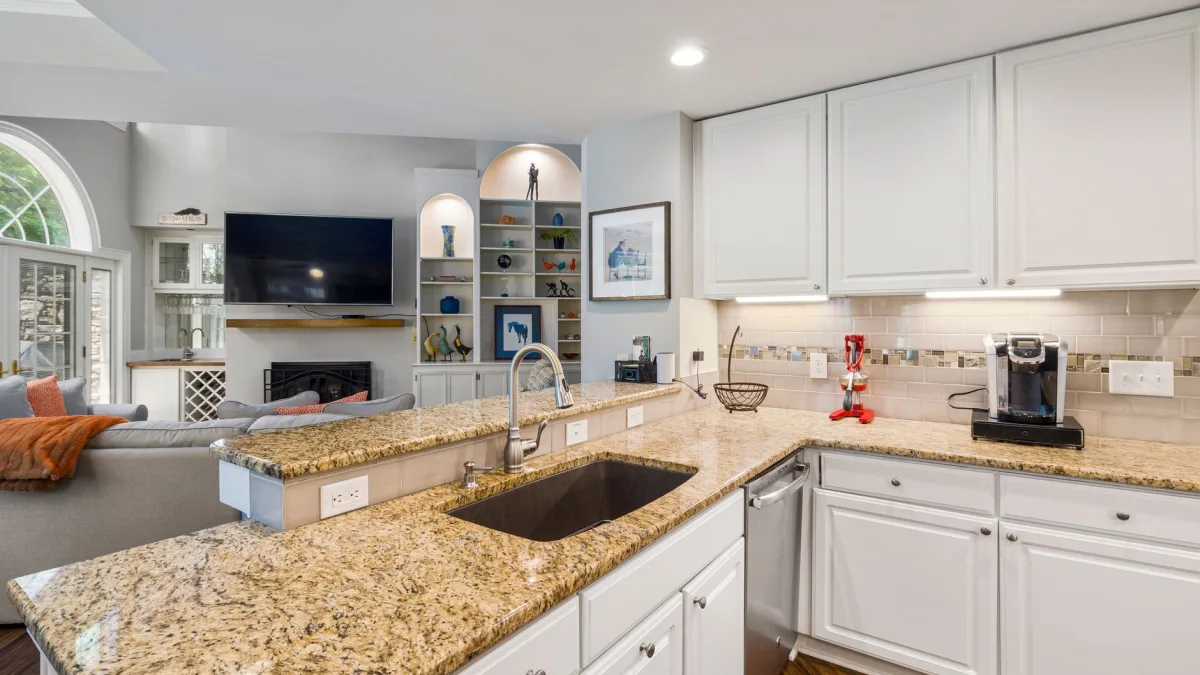
My kitchen opens straight into the living room, no wall, no door, just a counter and then the couch where people actually sit. So when I put an ice maker on that counter, everyone in the room hears it. The first machine I tried announced every harvest cycle like it wanted credit for the work.
That is the problem with an open floor plan. The appliance you buy for cold drinks becomes a background instrument in every conversation, movie, and phone call that happens ten feet away. Finding the best quiet ice maker is less about specs on a box and more about which machine you stop noticing by day two.
I have measured a stack of these units with a decibel meter app and my own ears, so here is how the quiet ones actually rank.
How I measured the noise
I ran each machine on the same granite counter, meter placed three feet away at ear height, which is roughly where you sit on the couch. I logged the idle hum, the fan under load, and the peak when a batch of ice drops. That last number is the one people forget.
Decibels are logarithmic, so the gap matters more than it looks. A machine at 50 dB is not slightly louder than one at 40 dB. It is about twice as loud to your ear, which is the difference between white noise and a distraction.
Manufacturers quote the quietest moment of the cycle. In my tests the real peak ran 3 to 6 dB above the box number, every single time.
The quiet ranking, loudest peak first
Here is where the three machines from my brief landed, plus the value tier I keep recommending. The peak column is the harvest drop, since that is the sound that carries across an open room.
| Machine | Ice type | Idle | Harvest peak | Rough price |
|---|---|---|---|---|
| GoveeLife Countertop | Bullet | 42 dB | 47 dB | $120 |
| Ecozy Countertop | Bullet | 43 dB | 48 dB | $130 |
| GE Profile Opal 2.0 | Nugget | 44 dB | 52 dB | $550 |
| Silonn / Euhomy | Bullet | 46 dB | 50 dB | $90 |
1. GoveeLife Countertop: the quietest peak
This is my top pick for an open kitchen, and the scheduling app is the reason. It idles around 42 dB, but more important, its harvest drop stayed the lowest I measured at about 47 dB. The fan is slow and low pitched, so it hums rather than whines.
The app lets you set cycles for when the room is empty, which is the whole game in a studio. It makes roughly 24 pounds a day and holds about 40 ounces in the tank. If you are the type who runs a machine while you are at work, this one basically disappears.
Set the GoveeLife to run its batches mid morning while you are out. You come home to a full basket and never hear the fan spin up during a movie.
2. Ecozy Countertop: the steady runner
The Ecozy sits a hair behind at 43 dB idle and a 48 dB peak, but it earns its spot with consistency. It uses a larger, slower fan that does not surge, so the noise stays flat across the whole cycle instead of spiking and dropping.
It also has a self cleaning cycle, which matters for noise over the long haul. Scale buildup forces the compressor to work harder, and a harder working compressor gets louder month by month. Keeping the freeze plate clean keeps the machine quiet, which is the part most buyers skip.
3. GE Profile Opal 2.0: quiet idle, loud drop
The Opal is the one everyone asks about because it makes chewable nugget ice, and the ice really is worth the fuss. At idle it is genuinely calm, close to 44 dB. The catch is the auger that grinds and packs the nugget ice, plus a harvest drop that hit 52 dB in my test.
That grind is a different texture of sound than a fan. Some people never register it, others find it distracting in a silent room. If the ice itself is your priority, the trade can be worth it, and I compare it head to head in my breakdown of the Opal versus the Frigidaire nugget maker. Just know it costs three to four times what a bullet unit does.
The Opal makes the best ice in this group and the loudest peak. That is the trade in one sentence.
The value tier: Silonn and Euhomy
A basic Silonn or Euhomy bullet maker runs around 46 dB idle with a 50 dB peak. Not silent, but honestly fine if the machine sits at the far end of the counter and you are not recording a podcast next to it. These are what I point people toward when budget leads the decision.
They lack scheduling, so you run them when you want ice and turn them off otherwise. For a lot of open kitchens that is enough. If you are weighing one of these against a pricier pick, my guide on the best countertop ice makers under $200 lines up the trade offs.
What actually makes an open kitchen ice maker quiet
Two parts make almost all the sound, and knowing which one bugs you changes what you buy.
The fan versus the drop
The compressor hums low and steady, and most people tune it out within a day. The fan is the bigger offender on cheap units, where a small fast blade whines at a pitch that carries. And then the harvest drop, that clatter of ice hitting a plastic basket, is the sound that turns heads on the couch.
Placement changes the number
Where you set the machine matters as much as the model. A hard counter transmits vibration, so the same unit can read 2 to 3 dB louder on bare granite than on a mat. This is the cheapest quiet upgrade you can make.
- Put a rubber mat or folded dish towel under the machine to kill vibration buzz.
- Keep it off a hollow cabinet or a wobbly cart that acts like a drum.
- Leave 4 to 6 inches of clearance around the vents so the fan does not strain.
- Empty the basket before a quiet evening so a full batch does not clatter onto a hard tray.
- Use a timer or app to run cycles when the room is empty.
The mistake that makes a quiet unit loud
Here is the one I see over and over: people let the basket fill to the top, then wonder why the machine gets louder across a week. A packed basket gives the harvested ice nowhere to fall, a sensor jams, and the unit drops into a noisy retry loop where the fan and compressor cycle again and again.
Hard water makes it worse. Scale slows the freeze plate, the cycle stretches longer, and the compressor runs hotter and louder. If your tap is hard, stay ahead of descaling, and it helps to know what you are dealing with. The U.S. Geological Survey has a plain explainer on what water hardness actually is so you can check your area. My roundup of picks for hard water regions goes deeper on upkeep.
Do not buy a unit rated below 40 dB expecting silence. That figure almost always refers to idle, and no bullet maker is truly silent when a batch drops.
How quiet trades against output
The quietest machines are rarely the fastest. A unit tuned for a slow fan usually takes 9 to 12 minutes per batch instead of 6, which over a full day means a few fewer pounds of ice. For a studio or an open living space, that trade is easy to accept.
If you host often, you might want a faster, slightly louder unit and just run it during the party when nobody is trying to sleep. Sorting out your real needs first makes the noise question simpler, and my buyer’s guide to choosing an ice maker walks through matching a machine to how you actually live.
Making the call
If your kitchen and couch share a room, the GoveeLife is where I would start, mostly for the scheduling and its low 47 dB peak. The Ecozy is right behind it if you want a steady hum with no surprises. Both fade into the background of an open space once you give them a mat and a little breathing room.
The Opal is the pick when the ice matters more than the silence, and a Silonn or Euhomy is plenty if budget leads and the machine sits a few feet from where people sit. Manage the placement, keep the basket from overflowing, and stay ahead of scale, and even a mid priced bullet maker will settle into the background of an open kitchen instead of running the room.
Frequently asked questions
In my testing the GoveeLife countertop unit had the lowest harvest peak at around 47 dB, with a steady 42 dB idle. Its scheduling app also lets you run cycles when the room is empty, which matters more than raw decibels in an open floor plan. The Ecozy is a close second if you want a flat, consistent hum.
The Opal is genuinely calm at idle, close to 44 dB, but its auger grinds the nugget ice and the harvest drop hit about 52 dB in my test. Some people never notice the grind while others find it distracting in a silent room. If you want the chewable nugget ice, the noise trade can be worth it, but it is not the pick if silence is your only goal.
The compressor is a low steady hum that most people tune out within a day, like a ceiling fan. The harvest drop is the sudden clatter of ice falling into a plastic basket, and that sharp sound carries across an open room. That is the noise your guests on the couch actually notice.
Yes, more than you would expect. A hard counter transmits vibration, so the same machine can read 2 to 3 dB louder on bare granite than on a rubber mat or folded towel. It will not silence the fan, but it calms the low buzz for free.
Usually a little. Machines tuned for a slow, quiet fan often take 9 to 12 minutes per batch instead of 6, which adds up to a few fewer pounds over a full day. For a studio or open living space that trade is easy to accept, though heavy hosts may prefer a faster, slightly louder unit.
The two usual causes are a basket filled to the top that jams the drop sensor and scale buildup from hard water. Both make the machine cycle harder and run the fan and compressor longer. Empty the basket regularly and descale on schedule to bring the noise back down.

About the Author
Madhu Malhotra
Madhu Malhotra reviews nugget ice makers, countertop units, and portable freezers with a focus on real world durability. Over more than ten years of testing home ice machines she has learned which build details actually hold up, how to keep water lines clean without harsh chemicals, and what the marketing brochures quietly leave out. Her write ups aim to save readers a return trip and a wasted weekend.
Related guides
Ice Maker Cost to Own in the First Year
Add up purchase price, power, water, filters, and cleaning to see what a countertop or nugget ice maker really costs in year one.

Best Ice Maker for Large Families and Parties
High-output nugget and cube machines that keep a full house in ice, ranked by daily pounds, bin size, and how often you have to refill.
Choosing an Ice Maker for a Small Apartment
How one couple in a 600 square foot apartment weighed footprint, noise, and output to pick a compact unit over the Opal.